
This article presents a comprehensive, chronologically structured historical analysis of the Israel-Palestine conflict, tracing its roots from ancient and biblical history through the late Ottoman period, the formative decades of the twentieth century, the founding of the State of Israel, successive wars, diplomatic processes, and the ongoing dynamics of the twenty-first century. Drawing on established historical scholarship, primary documents, and international records, this analysis strives to present all major perspectives with equal rigor and without political advocacy. The objective is to provide readers with a thorough historical foundation necessary for an informed understanding of one of the most complex and consequential conflicts of the modern world.
I. Ancient and Biblical History: Contested Origins
The land lying between the Jordan River and the Mediterranean Sea has been inhabited continuously for thousands of years, representing one of the earliest centers of human civilization. Known historically by various names including Canaan, Judea, Palestine, and the Holy Land, this territory has held profound religious, cultural, and political significance for multiple peoples and faiths throughout recorded history.
Archaeological and textual evidence indicates that Canaanite city-states flourished in the region as early as the third millennium BCE. Egyptian records, including the Merneptah Stele (circa 1208 BCE), provide some of the oldest known external references to a people called Israel in the region. The Hebrew Bible describes the Israelites as a people with a covenantal bond to this land, tracing their history from the patriarchs Abraham, Isaac, and Jacob, through the Exodus narrative, and into the period of the Israelite kingdoms.
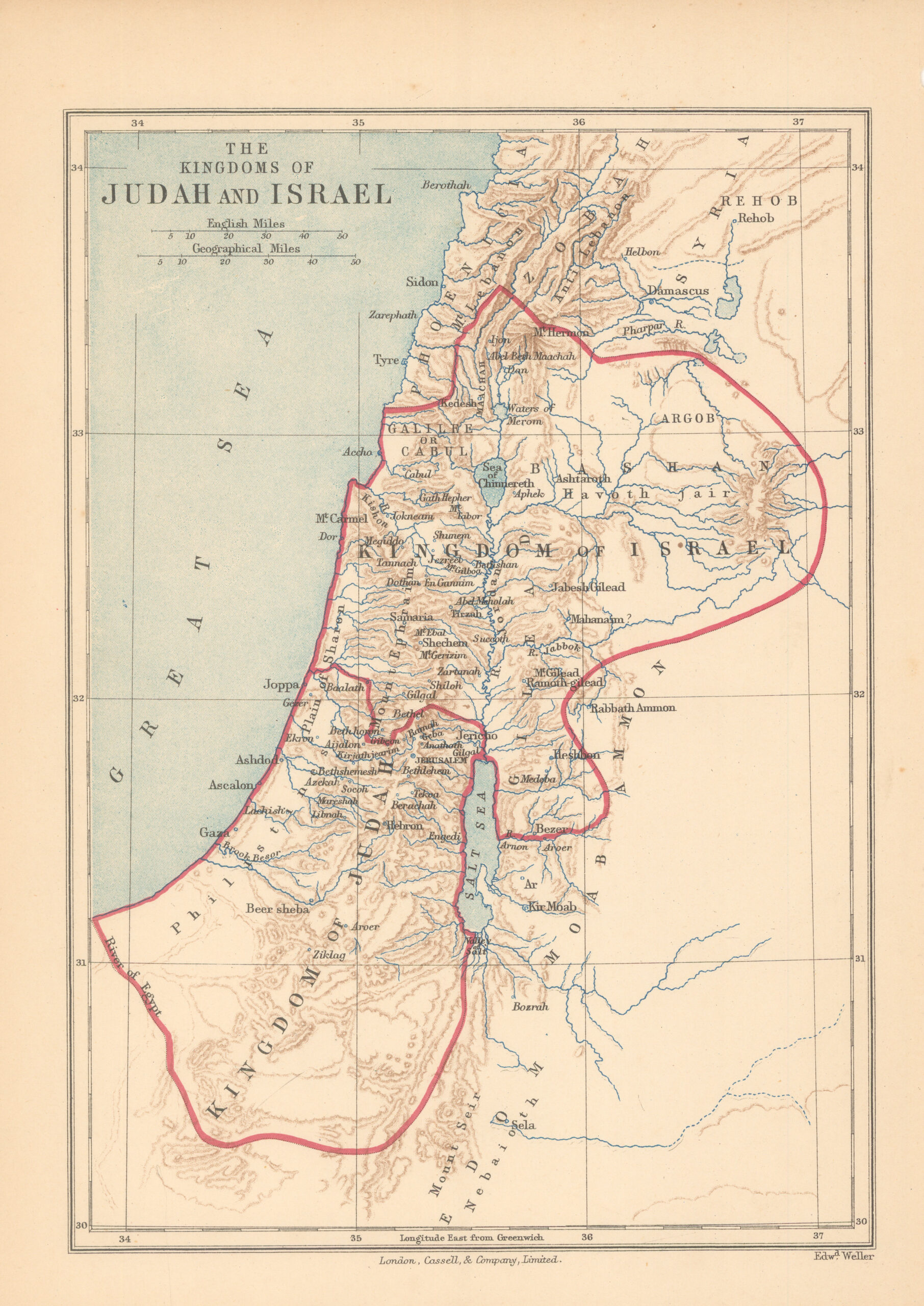
The United Kingdom of Israel under Kings Saul, David, and Solomon (approximately 1020 to 930 BCE) represents a foundational period in Jewish historical memory. Following its dissolution, the northern Kingdom of Israel fell to Assyrian conquest (722 BCE), and the southern Kingdom of Judah fell to Babylon (586 BCE), an event marked by the destruction of the First Temple in Jerusalem and the exile of a significant portion of the population.
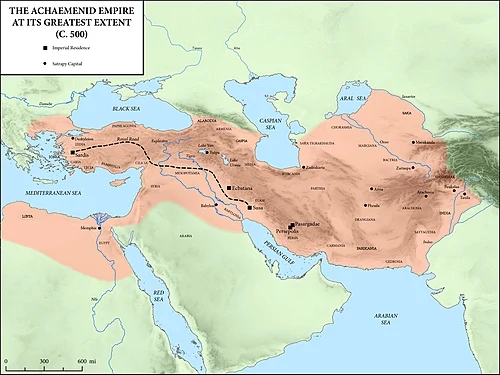
The return of Jewish exiles under Persian patronage (beginning circa 538 BCE), the construction of the Second Temple, and the subsequent periods of Hellenistic and Roman rule shaped Jewish religious and communal identity. The Roman destruction of the Second Temple in 70 CE and the suppression of the Bar Kokhba Revolt (132 to 135 CE) led to a significant dispersal of the Jewish population. Rome renamed the province Syria Palaestina, a name that would persist and evolve through subsequent centuries.
During the Byzantine period, the population of the region was predominantly Christian, while Jewish communities maintained a continuous, if diminished, presence. The Arab conquest in 636 to 638 CE introduced Islam as the dominant religion and Arabic as the primary language over subsequent generations. From this period onward, the majority of the population was Arab and Muslim, with significant Christian Arab and Jewish minority communities. The Crusader kingdoms (1099 to 1291), Mamluk sultanate, and finally the Ottoman Empire all ruled the region in succession.
What is essential to note from this ancient history is that multiple peoples have claims rooted in this land. Jewish historical and religious ties are among the oldest and most extensively documented. Arab and Muslim connections, while later in origin, span more than thirteen centuries of continuous inhabitation and cultural formation. Christian communities also maintain deep historical claims to numerous holy sites. These overlapping and deep-rooted connections form the irreducible historical core of a conflict that is not merely political but profoundly existential for those involved.
II. The Late Ottoman Period and the Rise of Nationalism (1800s to 1914)
A. The Ottoman Context
For approximately four centuries before World War I, the territory of Palestine was part of the Ottoman Empire, administered primarily within the provinces (vilayets) of Syria and Beirut, and the special district (mutasarrifate) of Jerusalem. The population was predominantly Arab, divided between Muslims and Christians, with a smaller but historically continuous Jewish community.
By the mid-nineteenth century, the Ottoman Empire was in accelerating decline, prompting both internal reform movements and increasing pressure from European powers. The Tanzimat reforms (1839 to 1876) introduced concepts of legal equality among Ottoman subjects regardless of religion, a shift that had complex and uneven effects on communal relations throughout the empire.
B. The Emergence of Zionism
Zionism, the movement for Jewish national self-determination, emerged as a formal political ideology in late nineteenth-century Europe. Its development was closely tied to the persistence of widespread antisemitism across Europe, including violent pogroms in the Russian Empire, systematic legal discrimination, and the deeply troubling Dreyfus Affair in France, which shocked many into recognizing that Jewish assimilation into European society was not a guarantee of security or equality.
Theodor Herzl, an Austro-Hungarian Jewish journalist, is widely regarded as the founder of political Zionism. His 1896 pamphlet Der Judenstaat (The Jewish State) argued that the only lasting solution to antisemitism was the establishment of a sovereign Jewish state. In 1897, the First Zionist Congress convened in Basel, Switzerland, formally establishing the World Zionist Organization and adopting the goal of creating a publicly recognized, legally secured homeland for the Jewish people in Palestine.
It is important to note that Zionism was not a monolithic movement. It encompassed a broad spectrum of ideological positions, including religious Zionism, socialist Zionism, cultural Zionism, and revisionist Zionism, each with different visions of the character and boundaries of the desired Jewish state. What united them was the core conviction that Jews required a national home.
C. Early Aliyot and Arab Responses
Beginning in the 1880s, successive waves of Jewish immigration to Palestine, known as aliyot (singular: aliyah, meaning ascent), brought growing numbers of Jewish settlers primarily from Eastern Europe. The First Aliyah (1882 to 1903) and the Second Aliyah (1904 to 1914) established agricultural communities, purchased land from Ottoman and Arab landowners, and began constructing the institutional foundations of a Jewish community (the Yishuv).
The Arab population of Palestine, numbering approximately 500,000 to 600,000 at the turn of the twentieth century compared to roughly 25,000 to 30,000 Jewish residents, initially regarded the new immigrants with a mix of indifference, curiosity, and, in some cases, economic benefit. However, as the ideological character of the Zionist project became clearer and land purchases intensified, Arab concerns grew. Arab intellectual and political circles began articulating opposition to Zionist aims as early as the 1890s and early 1900s, framing the issue in terms of both nationalist self-determination and resistance to displacement.
Both the Jewish and Arab populations of Palestine were, by the early twentieth century, developing distinct national identities and aspirations for self-governance in the same territory. This fundamental overlap would define the conflict for the century that followed.
III. World War I and the Competing Promises (1914 to 1920)
The outbreak of World War I in 1914 and the Ottoman Empire’s entry on the side of the Central Powers created an unprecedented opening for the reorganization of the Middle East under British and French imperial influence. The decisions made by the wartime Allied powers during this period, characterized by internal contradictions and competing promises, established much of the framework for the subsequent conflict.
A. The Hussein-McMahon Correspondence (1915 to 1916)
In a series of letters exchanged between Sharif Hussein bin Ali of Mecca and the British High Commissioner in Egypt, Sir Henry McMahon, Britain appeared to pledge support for Arab independence in a large territory of the Arab world in exchange for an Arab revolt against Ottoman rule. Hussein led the Arab Revolt beginning in 1916. The precise geographic scope of the promised Arab state and whether Palestine was included or excluded from British promises has been disputed by historians and the parties ever since, with the ambiguity of the original Arabic and English texts offering fodder to both interpretations.
B. The Sykes-Picot Agreement (1916)
Simultaneously, British and French diplomats Mark Sykes and Francois Georges-Picot negotiated a secret agreement dividing much of the Arab Middle East into British and French spheres of influence. When this agreement was revealed by the Bolsheviks after the Russian Revolution of 1917, it was seen as a direct betrayal of the promises made to Arab leaders and deepened Arab mistrust of European powers.
C. The Balfour Declaration (1917)
On November 2, 1917, British Foreign Secretary Arthur James Balfour wrote a letter to Walter Rothschild, a leader of the British Jewish community, stating that the British government viewed with favor the establishment in Palestine of a national home for the Jewish people and would use its best efforts to facilitate that objective. Critically, the declaration also stipulated that nothing shall be done which may prejudice the civil and religious rights of existing non-Jewish communities in Palestine, or the rights and political status enjoyed by Jews in any other country.
His Majesty’s Government view with favour the establishment in Palestine of a national home for the Jewish people, and will use their best endeavours to facilitate the achievement of this object, it being clearly understood that nothing shall be done which may prejudice the civil and religious rights of existing non-Jewish communities in Palestine… — The Balfour Declaration, November 2, 1917
The Balfour Declaration was a landmark document for the Zionist movement, representing the first formal recognition of Zionist aims by a major world power. For Arab Palestinians, it represented a fundamental contradiction: a promise made over their heads about a land in which they formed the clear majority, without their consent. The internal tension within the declaration itself, between promoting Jewish national aims and protecting Arab civil rights, would prove impossible to resolve.
D. The British Mandate
Following the defeat of the Ottoman Empire and the postwar settlement, the League of Nations granted Britain a mandate over Palestine in 1920, formally confirmed in 1922. The mandate incorporated the text of the Balfour Declaration and charged Britain with facilitating the establishment of the Jewish national home while also administering the territory for the benefit of its existing population. The inherent contradiction between these two obligations, both of which Britain had formally accepted, placed the mandatory power in an ultimately untenable position that it never satisfactorily resolved.
IV. The British Mandate Period (1920 to 1947)
A. Population Growth and Communal Tension
The interwar period was marked by dramatic demographic change and escalating communal violence. Successive waves of Jewish immigration, driven in large part by rising antisemitism in Europe and, from the mid-1930s onward, by the catastrophic policies of Nazi Germany, increased the Jewish population of Palestine from approximately 56,000 in 1918 to roughly 630,000 by 1947. The Arab population also grew substantially over the same period, reaching approximately 1.2 million.
Land purchases by Jewish organizations, accompanied by the displacement of Arab tenant farmers, became a source of acute grievance. Arab Palestinian national consciousness intensified in response to the perceived dual threat of Zionist settlement and British imperial control. Major outbreaks of communal violence occurred in 1920, 1921, 1929, and during the Arab Revolt of 1936 to 1939.
B. The Arab Revolt (1936 to 1939)
The Arab Revolt, also known as the Great Palestine Revolt, was a sustained nationalist uprising against British rule and Jewish immigration. It began with a general strike and escalated into armed resistance. The British responded with significant military force, including collective punishment measures, and the revolt was suppressed by 1939 at the cost of thousands of Arab, Jewish, and British lives. The revolt represented the most serious expression of Palestinian Arab nationalism in the mandate period and fundamentally shaped subsequent British policy.
C. The 1939 White Paper
In response to the Arab Revolt and growing concern about stability in the region as war in Europe loomed, the British government issued the McDonald White Paper in May 1939. The document imposed strict limits on Jewish immigration (75,000 over five years) and land purchases, and proposed an independent Palestinian state within ten years in which both Arabs and Jews would share governance. Zionist organizations rejected the White Paper as a betrayal of the Balfour Declaration mandate obligations. Arab leaders, though the document addressed several of their demands, also largely rejected it because it did not end Jewish immigration immediately.
The White Paper nonetheless became British policy and, as World War II began, it effectively barred Jewish refugees fleeing Nazi persecution from entering Palestine, a decision whose moral dimensions were staggering and that remains deeply contested.
D. The Holocaust and Its Consequences
The systematic murder of six million Jews by Nazi Germany and its collaborators during the Holocaust (1941 to 1945) transformed the political context of the Jewish national question. Survivors of the Holocaust, many of whom had no communities to return to and faced renewed hostility in Eastern Europe, overwhelmingly sought to reach Palestine. The British, bound by the 1939 White Paper, restricted immigration and intercepted ships carrying Jewish displaced persons, a policy that attracted intense international condemnation.
The Holocaust also generated unprecedented global support for the Zionist project, particularly in the United States. It intensified the conviction among Jewish communities worldwide that a secure national homeland was not an aspiration but an existential necessity. It also hardened Jewish paramilitary organizations in Palestine, including the Haganah, Irgun, and Lehi (Stern Gang), into active armed resistance against British rule.
E. Toward Partition: The UNSCOP Proposal
By 1947, faced with unmanageable intercommunal violence, a Jewish insurgency that included the bombing of the British headquarters at the King David Hotel in 1946, and a financial crisis following World War II, Britain announced it would terminate its mandate and refer the question of Palestine to the newly established United Nations.
The United Nations Special Committee on Palestine (UNSCOP), composed of representatives from eleven neutral nations, investigated conditions in the territory and among Jewish displaced persons in Europe. Its majority report, issued in August 1947, recommended the partition of Palestine into separate Jewish and Arab states, with Jerusalem placed under international administration.
V. Partition, War, and the Founding of Israel (1947 to 1949)
A. UN Resolution 181
On November 29, 1947, the United Nations General Assembly adopted Resolution 181, the Partition Plan, by a vote of 33 to 13, with 10 abstentions. The plan allocated approximately 56 percent of Mandatory Palestine to the proposed Jewish state and 43 percent to the proposed Arab state. The Jewish population, constituting roughly one-third of the total, would receive a state in which Jews would be a narrow majority; the Arab state would have a substantial Arab majority. Jerusalem, a city sacred to all three Abrahamic faiths, would be administered as a corpus separatum under international authority.
The Jewish Agency, the leading institution of the Yishuv, accepted the partition plan despite reservations about its boundaries. Arab governments and Palestinian Arab leaders rejected it categorically, arguing that the plan was fundamentally unjust: it granted majority-minority status disproportionate to the actual population distribution, was imposed without the consent of the Arab majority of Palestine, and violated the principle of self-determination for the Palestinian Arab population.
B. The 1948 War: Al-Nakba and the War of Independence
Following the adoption of Resolution 181, intercommunal violence intensified dramatically. When Britain’s mandate expired on May 14, 1948, the Jewish Agency declared the establishment of the State of Israel. Within hours, the United States and the Soviet Union granted recognition. The following day, the Arab League states of Egypt, Jordan, Syria, Iraq, and Lebanon launched military operations against the new state.
The 1948 Arab-Israeli War, known in Israeli history as the War of Independence (Milchemet Ha’atzma’ut) and in Palestinian Arab history as the Nakba (catastrophe), was the defining event for both peoples. Israel, through a combination of superior organization, effective military command, international support, and the disunity and miscalculation of Arab forces, ultimately prevailed. At the armistice, Israel controlled approximately 78 percent of Mandatory Palestine, significantly more than the 56 percent allocated by the partition plan.
The demographic consequences were catastrophic for the Palestinian Arab population. Approximately 700,000 Palestinians fled or were expelled from their homes during the war, a number that, with their descendants, grew into the millions. Palestinian villages were destroyed, and the refugees were prevented from returning. The causes of the Palestinian refugee crisis, specifically the extent to which Palestinians fled voluntarily in response to wartime conditions and Arab calls versus the extent to which they were expelled by Israeli military forces, have been among the most contentious questions in Israeli-Palestinian historiography. Declassified Israeli military archives and the work of the New Historians have confirmed that both dynamics occurred, in varying proportions in different localities.
The West Bank, including East Jerusalem, was captured and subsequently annexed by Transjordan (soon renamed Jordan). The Gaza Strip came under Egyptian military administration. No Palestinian Arab state was established on any part of Mandatory Palestine.
VI. From 1949 to 1967: Occupation, Refugees, and Regional Conflict
A. The Refugee Crisis and UNRWA
The Palestinian refugee crisis was institutionalized in 1949 with the establishment of the United Nations Relief and Works Agency for Palestine Refugees (UNRWA). The United Nations General Assembly had also passed Resolution 194 in December 1948, calling for the return of refugees who wished to live at peace with their neighbors, or compensation for those who chose not to return. Israel refused to implement this resolution, citing the ongoing state of war with Arab states and security concerns. The status of Palestinian refugees and their claimed right of return remains one of the most intractable issues in all subsequent peace negotiations.
Palestinian refugees, concentrated in camps in Jordan, Lebanon, Syria, the West Bank, and Gaza, maintained their identity, communal structures, and aspirations for return. The refugee camps became crucibles of Palestinian national identity and, in later decades, bases for armed resistance organizations.
B. Arab Nationalism and the Suez Crisis
The 1950s were dominated by the rise of Arab nationalism, particularly embodied in the figure of Egyptian President Gamal Abdel Nasser. The 1956 Suez Crisis, in which Israel joined Britain and France in an attack on Egypt following Nasser’s nationalization of the Suez Canal, briefly placed Israeli forces in the Sinai Peninsula before international pressure, primarily from the United States and Soviet Union, compelled a withdrawal. The crisis illustrated the intertwining of the Israeli-Palestinian conflict with broader Cold War dynamics and inter-Arab politics.
C. The Palestine Liberation Organization
The Palestine Liberation Organization (PLO) was founded in 1964 by the Arab League as an umbrella organization for Palestinian national movements. Its founding charter called for the liberation of Palestine through armed struggle and the elimination of the State of Israel. The PLO came under the effective leadership of Yasser Arafat and his Fatah faction following the 1967 war. While its founding documents and initial ideology have been widely cited as evidence of Palestinian maximalism, the PLO’s subsequent decades-long evolution toward a two-state framework represents one of the most significant political transformations in the conflict’s history.
VII. The 1967 Six-Day War and Its Transformative Consequences
The June 1967 war, known in Israel as the Six-Day War and in the Arab world as the June War or Setback (al-Naksa), was perhaps the single most consequential event of the post-1948 period. A complex interplay of Egyptian military posturing, Syrian threats, Jordanian treaty obligations, and Israeli preventive strategy produced a conflict that lasted six days and fundamentally reshaped the region.
Israel launched a preemptive strike against Egypt on June 5, 1967, destroying the Egyptian air force on the ground. In subsequent fighting, Israel captured the Sinai Peninsula and Gaza Strip from Egypt, the West Bank including East Jerusalem from Jordan, and the Golan Heights from Syria. Israel had tripled the territory under its control within six days.
The capture of the West Bank and Gaza Strip placed approximately one million Palestinians under Israeli military occupation. Israel also captured and subsequently annexed East Jerusalem, a move not recognized by any other country under international law. UN Security Council Resolution 242, adopted in November 1967, called for Israeli withdrawal from occupied territories and the right of all states in the region to live in peace within secure and recognized boundaries. The resolution’s ambiguity (whether it required withdrawal from all or merely some occupied territories) has been disputed ever since.
The 1967 war launched what became known as the occupation, now lasting more than five decades. Under international law, including the Fourth Geneva Convention, an occupying power has specific obligations regarding the protection of civilian populations and is prohibited from transferring its own civilian population into occupied territory. The subsequent Israeli settlement enterprise in the West Bank and Gaza has been consistently judged illegal under international law by the International Court of Justice and the overwhelming majority of international legal opinion, a characterization Israel contests.
VIII. The Years of Conflict: 1967 to 1993
A. The 1973 Yom Kippur War
On October 6, 1973, the holiest day of the Jewish calendar, Egypt and Syria launched a coordinated surprise attack on Israeli-held territory in Sinai and the Golan Heights. Initial Arab advances caught Israel off-guard and inflicted significant casualties. After several weeks of intense fighting, Israeli forces regained the upper hand, crossing the Suez Canal and encircling the Egyptian Third Army. A UN ceasefire ended active hostilities. The war, known in Egypt as the October War and in Israel as the Yom Kippur War, demonstrated both Arab military capacity and Israeli vulnerability, creating psychological and political conditions for subsequent diplomacy.
B. Israeli-Egyptian Peace and Camp David
Egyptian President Anwar Sadat’s dramatic visit to Jerusalem in November 1977, followed by the Camp David Accords negotiated under U.S. President Jimmy Carter in 1978, led to the Egypt-Israel Peace Treaty of 1979. Under the agreement, Israel returned the Sinai Peninsula to Egypt in exchange for full diplomatic recognition and peace. The treaty was the first between Israel and an Arab state and fundamentally altered the regional strategic landscape. Sadat was assassinated in 1981 by Egyptian Islamists who viewed the peace as a betrayal; Menachem Begin shared the Nobel Peace Prize with him in 1978.
The Camp David Accords also included a framework for Palestinian autonomy in the West Bank and Gaza, but these provisions were never implemented, as Palestinian leaders and other Arab states rejected the framework as insufficient.
C. The PLO in Lebanon and the 1982 Invasion
Following the expulsion of PLO forces from Jordan during Black September (1970), the PLO established a powerful base in Lebanon, from which it conducted operations against Israel. In June 1982, Israel launched a large-scale invasion of Lebanon aimed at destroying the PLO infrastructure and installing a friendly government in Beirut. The invasion led to the expulsion of the PLO from Lebanon, but also to the massacre of Palestinian civilians in the Sabra and Shatila refugee camps by Lebanese Christian militias under the watch of Israeli forces. An Israeli government inquiry, the Kahan Commission, found Israeli commanders, including Defense Minister Ariel Sharon, indirectly responsible. The Lebanese quagmire continued for years and established a pattern of unintended consequences from military intervention.
D. The First Intifada
In December 1987, a spontaneous uprising erupted in the Gaza Strip and rapidly spread to the West Bank. The First Intifada (Arabic for shaking off) was a popular mass uprising characterized by stone throwing, strikes, commercial boycotts, and civil disobedience. It was not initially organized by the PLO, though PLO-affiliated committees came to play a role. The Intifada graphically exposed the human costs of occupation to international audiences and brought the Palestinian question back to the center of international attention after years of being overshadowed by PLO diplomacy and inter-Arab politics.
The Intifada also saw the founding of Hamas (Harakat al-Muqawama al-Islamiyya, the Islamic Resistance Movement) in 1987 by Sheikh Ahmed Yassin and associates affiliated with the Muslim Brotherhood. Hamas offered a religious nationalist alternative to the secular nationalism of the PLO, one that rejected Israel’s existence and embraced armed resistance including attacks on civilians.
IX. The Oslo Peace Process (1993 to 2000)
The end of the Cold War, the Gulf War of 1991, and the exhaustion brought by the Intifada created new diplomatic possibilities. Secret negotiations conducted through Norwegian intermediaries between Israeli officials and PLO representatives produced the Oslo Accords.
The Oslo I Accord, signed on the White House lawn on September 13, 1993, with the famous handshake between Yitzhak Rabin and Yasser Arafat witnessed by President Bill Clinton, was a watershed moment. The PLO recognized Israel’s right to exist; Israel recognized the PLO as the representative of the Palestinian people. The accords established the Palestinian Authority (PA) as an interim self-governing body for Palestinians in parts of the West Bank and Gaza.
The Oslo Accords did not resolve the fundamental issues of the conflict: final borders, the status of Jerusalem, the fate of Palestinian refugees, and the future of Israeli settlements. They deferred these core questions to a final-status negotiation to be completed within five years, a deadline that was never met.
The Oslo process generated intense hope and fierce opposition on both sides. Israeli critics, including the settler movement and right-wing nationalists, viewed the recognition of the PLO as a catastrophic concession. Palestinians critical of Oslo, including Hamas and secular rejectionist factions, argued that the accords legitimized Israeli occupation without guaranteeing Palestinian sovereignty. Yitzhak Rabin was assassinated by a right-wing Israeli ultranationalist, Yigal Amir, on November 4, 1995, a murder that profoundly disrupted the peace process.
Oslo II (1995) further divided the West Bank into Areas A (Palestinian civil and security control), B (Palestinian civil control, joint security), and C (Israeli civil and security control). Area C, comprising roughly 60 percent of the West Bank, remains under full Israeli control and encompasses the vast majority of Israeli settlements.
A. The Camp David Summit (2000) and the Collapse of the Process
In July 2000, President Clinton convened an intensive summit at Camp David between Israeli Prime Minister Ehud Barak and PA Chairman Arafat in an attempt to reach a final-status agreement. The talks collapsed without agreement. Competing narratives about what happened at Camp David have been fiercely contested ever since.
The dominant Israeli and American account at the time held that Barak made an extraordinarily generous offer, including Palestinian statehood over the vast majority of the West Bank and Gaza, and that Arafat’s rejection and failure to make a counter-offer demonstrated that Palestinian leadership was not interested in peace. Subsequent scholarship and accounts from participants of various nationalities have complicated this narrative considerably. Analysts have shown that the Israeli offer, while significant, retained Israeli sovereignty over large settlement blocs, proposed arrangements for Jerusalem short of Palestinian sovereignty over East Jerusalem, and failed to address the refugee issue in terms acceptable to Palestinians. Whether the breakdown was attributable to Arafat’s intransigence, the inadequacy of the Israeli offer, the structure of the negotiations, or some combination is still debated by historians.
X. The Second Intifada and the Gaza-West Bank Split (2000 to 2007)
A. The Second Intifada
On September 28, 2000, Ariel Sharon, then leader of the Israeli Likud party, visited the Temple Mount/Haram al-Sharif in Jerusalem, accompanied by a large security force. The visit, to one of the most contested sites in the world, was seen by Palestinians as a deliberate provocation and ignited the Second Intifada, also called the Al-Aqsa Intifada.
The Second Intifada was markedly more violent than the first. Palestinian militant organizations, including Hamas, Palestinian Islamic Jihad, and factions within Fatah, carried out a wave of suicide bombings targeting Israeli civilians in buses, restaurants, markets, and public spaces. Approximately 1,000 Israelis were killed and thousands wounded. Israel responded with major military operations in the West Bank, including Operation Defensive Shield (2002), which reoccupied cities turned over to Palestinian Authority control under Oslo, imposed strict closures and movement restrictions, built the West Bank barrier (called a security fence by Israel and an apartheid wall by Palestinian critics), and carried out targeted killings of militant leaders.
Palestinian civilian casualties were also substantial, with over 3,000 Palestinians killed during the intifada. The economy of the West Bank and Gaza collapsed under closures and military operations. The physical and psychological scars of this period on both societies were deep and lasting.
B. The Disengagement from Gaza
In 2005, Prime Minister Sharon, in a surprise reversal of longstanding Likud policy, unilaterally withdrew all Israeli settlers and soldiers from the Gaza Strip, as well as four small settlements in the northern West Bank. The disengagement was supported by those who argued it removed Israel from direct responsibility for the Gaza population, and opposed by settlers and Israeli nationalists who saw it as an abandonment of a biblical patrimony.
Following the disengagement, Gaza held elections in January 2006 in which Hamas won a decisive legislative majority, defeating Fatah. Israel, the United States, and the European Union refused to engage with a Hamas-led government unless it met conditions including recognition of Israel, renunciation of violence, and acceptance of existing agreements. A period of Palestinian Authority internal conflict culminated in June 2007 when Hamas forcibly expelled Fatah from Gaza, establishing exclusive control. Since then, the Palestinian political world has been divided between the Fatah-led Palestinian Authority in the West Bank and Hamas in Gaza.
XI. Gaza Under Siege: Conflict and Humanitarian Crisis (2007 to 2023)
Following Hamas’s takeover of Gaza, Israel and Egypt imposed a blockade on the territory, restricting the movement of goods and people. Israel maintains that the blockade is a necessary security measure to prevent arms smuggling to Hamas. Critics, including the United Nations and numerous human rights organizations, characterize the blockade as collective punishment of Gaza’s civilian population in violation of international law.
Gaza, one of the most densely populated territories on earth with approximately two million people living in 365 square kilometers, has experienced several major military conflicts since 2007. Operation Cast Lead (2008 to 2009), Operation Pillar of Defense (2012), Operation Protective Edge (2014), and multiple smaller escalations each resulted in significant Palestinian civilian casualties and considerable destruction of infrastructure, as well as Israeli military casualties and deaths from rocket attacks on Israeli territory.
Each round of conflict followed a broadly similar pattern: Hamas and other armed groups fired rockets into Israeli territory; Israel responded with air strikes and, in some operations, ground incursions; ceasefires were eventually brokered. Human rights organizations on all sides documented violations during these conflicts, including allegations of Hamas using civilian infrastructure, and Israeli strikes on schools, hospitals, and UN facilities. The civilian death toll among Palestinians in each conflict was disproportionately high relative to Israeli military and civilian casualties, generating intense international debate about the proportionality and discrimination required under international humanitarian law.
The Palestinian population of Gaza experienced severe humanitarian conditions throughout this period, with high unemployment, periodic shortages of electricity and water, and restrictions on travel, export, and import. International human rights bodies and UN agencies consistently warned of a humanitarian catastrophe.
XII. The West Bank: Settlements, Occupation, and Palestinian Governance
The Israeli settlement enterprise in the West Bank has grown steadily since 1967, particularly accelerating from the 1990s onward. Today, approximately 700,000 Israeli settlers live in the West Bank (including East Jerusalem) in communities that range from major suburban cities to small ideologically motivated outposts. The settlements are connected by a road network that Palestinians are largely prohibited from using, creating a geographic fragmentation of the West Bank that Palestinian leaders and international observers argue makes a viable, contiguous Palestinian state increasingly difficult to achieve.
The International Court of Justice ruled in 2004 that the construction of the West Bank barrier violated international law where it deviated from the pre-1967 Green Line. The settlements have been consistently declared illegal under international law, including by the United Nations Security Council in Resolution 2334 (2016). Israel contests these legal interpretations, particularly regarding the applicability of the Fourth Geneva Convention, though this position is rejected by the overwhelming consensus of international legal opinion.
The Palestinian Authority, headquartered in Ramallah, has governed Areas A and B of the West Bank under the Oslo framework, providing civil and in some cases security administration for the majority of the Palestinian population. The PA has been repeatedly criticized by Palestinian civil society and political opposition for corruption, authoritarianism, and, in the view of many Palestinians, an insufficient defense of Palestinian rights and failure to achieve political progress.
A series of peace process efforts, including the Clinton Parameters (2000), the Geneva Initiative (2003), the Annapolis Conference (2007), and the Kerry Initiative (2013 to 2014), all failed to produce a final-status agreement. Each failure deepened skepticism on both sides about the viability of a negotiated two-state solution.
XIII. The Abraham Accords and Regional Realignment (2020)
In August and September 2020, the United States brokered normalization agreements between Israel and the United Arab Emirates, Bahrain, Sudan, and Morocco. These agreements, collectively called the Abraham Accords, represented the first Arab-Israeli normalization since Jordan’s peace treaty with Israel in 1994 and a significant shift in Middle Eastern geopolitics.
Proponents argued that the Abraham Accords demonstrated that peace with Israel need not wait for resolution of the Palestinian issue, that Arab states had moved on pragmatically, and that normalization could generate economic and security benefits. Critics, particularly Palestinians and their supporters, argued that the accords fundamentally undermined the longstanding Arab League consensus (embedded in the Arab Peace Initiative of 2002) that normalization with Israel must be conditional on Palestinian statehood. They argued the accords gave Israel diplomatic rewards without requiring any concession on the Palestinian question.
Saudi Arabia, the most significant Arab state, did not join the Abraham Accords, but relations between Israel and Saudi Arabia warmed considerably in subsequent years. Negotiations for Saudi-Israeli normalization, reportedly under discussion with U.S. facilitation in 2023, were dramatically interrupted by the events of October 2023.
XIV. October 7, 2023 and the Gaza War
A. The Hamas Attack
On October 7, 2023, Hamas and allied militant groups launched the largest and most lethal attack on Israeli civilians in the country’s history. Thousands of fighters breached the Gaza perimeter fence at multiple points and attacked Israeli communities, kibbutzim, military bases, and a music festival in the Negev desert. Approximately 1,200 people were killed, the majority of them Israeli civilians, making it the deadliest day for Jewish people since the Holocaust. Approximately 250 people were taken hostage into Gaza, including women, children, and elderly individuals. The attacks involved documented atrocities including the killing of civilians, sexual violence, and the deliberate targeting of non-combatants.
The attack shocked Israeli society to its core and generated widespread international condemnation. Hamas leadership stated that the attack was a response to Israeli policies in Jerusalem, the West Bank, and Gaza, though this framing was rejected by Israel, Western governments, and many others as a justification for crimes against civilians.
B. The Israeli Military Response
Israel declared war on Hamas and launched an extensive military campaign in Gaza. The campaign involved sustained aerial bombardment and a large ground invasion, targeting Hamas military infrastructure, tunnels, command centers, and personnel. Israel stated that Hamas’s use of civilian infrastructure, including hospitals, schools, and mosques, as military assets made it legally permissible to strike those locations after appropriate precautions.
The civilian toll in Gaza was catastrophic. By mid-2024, Palestinian health authorities reported tens of thousands of Palestinian deaths, the vast majority of whom were civilians, with women and children constituting a significant proportion. The United Nations and international humanitarian organizations reported the near-total destruction of large portions of Gaza’s built environment, the displacement of approximately 90 percent of the population, and conditions amounting to famine in parts of the territory.
The Israeli military campaign generated intense international debate. Israel and its principal allies, including the United States, affirmed Israel’s right to self-defense and the necessity of dismantling Hamas’s military and governing capacity. Critics, including many United Nations bodies, human rights organizations, and numerous governments, argued that the scale of destruction and civilian casualties violated principles of proportionality and distinction under international humanitarian law, and that Israel’s restrictions on humanitarian aid constituted collective punishment.
C. The International Court of Justice Proceedings
South Africa initiated proceedings against Israel at the International Court of Justice (ICJ) in December 2023, alleging violations of the Genocide Convention. In January 2024, the ICJ issued provisional measures calling on Israel to take all measures within its power to prevent acts that could fall under the Genocide Convention and to ensure humanitarian access to Gaza, while declining at that stage to order a ceasefire. The proceedings remained ongoing, with their final legal and political consequences as yet undetermined.
D. Hostage Crisis and Negotiations
The approximately 250 hostages taken to Gaza became a defining humanitarian and political crisis in Israel. Negotiations mediated by Qatar, Egypt, and the United States produced a temporary ceasefire in November 2023, during which some hostages were exchanged for Palestinian prisoners held by Israel. The fate of the remaining hostages, and the conditions under which they might be released, remained a central axis of the conflict into 2024 and beyond, entangling the ceasefire negotiations with the fundamental questions of Gaza’s political future.
XV. Core Issues in Dispute
Despite decades of negotiations, the fundamental issues that divide Israelis and Palestinians remain unresolved. A clear-eyed analysis of these issues requires acknowledging the legitimate concerns and narratives of both sides.
A. Borders and Territory
The pre-1967 Green Line (the 1949 armistice lines) is the baseline recognized by international law for the boundaries of a future Palestinian state alongside Israel. The Palestinian position has formally accepted a two-state solution based on the 1967 lines. Israel has not accepted a return to the 1967 lines, arguing they are indefensible, and successive governments have insisted that major settlement blocs be incorporated into Israel in any final agreement, with equivalent land swaps. The expansion of settlements under successive Israeli governments of various political orientations has dramatically complicated any territorial settlement.
B. Jerusalem
Jerusalem is claimed as a capital by both Israelis and Palestinians. Israel declared Jerusalem its capital following the 1948 war (West Jerusalem) and extended this claim to the entire city following the 1967 annexation of East Jerusalem. Israel’s parliament and government are located in West Jerusalem. Palestinians claim East Jerusalem, including the Old City, as the capital of a future Palestinian state. The Old City contains the Temple Mount/Haram al-Sharif, holy to both Judaism and Islam, as well as the Church of the Holy Sepulchre. No internationally recognized formula for sovereignty over Jerusalem has been agreed, and the city’s final status represents one of the most religiously and emotionally charged of all the core issues.
C. Palestinian Refugees and the Right of Return
The Palestinian demand for a right of return for the approximately 700,000 Palestinians displaced in 1948 and their millions of descendants, as enshrined in UN Resolution 194, is a fundamental element of Palestinian national identity and political discourse. Israel has consistently rejected any formulation of the right of return that would allow large numbers of Palestinian refugees to settle inside Israel’s pre-1967 borders, arguing that this would demographically transform the Jewish state. Previous negotiations have explored formulas involving compensation, limited symbolic return, and Palestinian state citizenship, but no mutually acceptable arrangement has been found.
D. Security
Israel’s security concerns are rooted in a history of existential military threats, terrorism, and the experience of 1948 and 1967 when its very existence was challenged. The October 7, 2023 attack deepened Israeli society’s conviction that no arrangement can leave the country vulnerable to attack from neighboring territory. Palestinians also have profound security concerns: the experience of living under military occupation with attendant restrictions, settler violence, and periodic large-scale military operations in Gaza has been formative in shaping Palestinian political consciousness.
E. Hamas and Palestinian Political Division
The internal division between the Palestinian Authority and Hamas presents a structural problem for any peace process. Israel has declined to negotiate with Hamas, which it, along with the United States and European Union, designates as a terrorist organization. Hamas has historically rejected recognition of Israel and any two-state solution. The Palestinian Authority, weakened by years of political stagnation and corruption allegations, has limited legitimacy and does not speak for the population of Gaza. Without a unified and representative Palestinian leadership, reaching and implementing any agreement faces profound practical obstacles.
XVI. International Law and the Conflict
The conflict has generated an extensive body of international legal consideration. The following represents the principal legal frameworks and their application, as understood by the international legal mainstream.
The Fourth Geneva Convention (1949), to which Israel is a signatory, governs the obligations of an occupying power and prohibits the transfer of civilian population into occupied territory, a provision widely cited in condemnation of Israeli settlements. Israel contests the applicability of the Fourth Geneva Convention to the West Bank on historical and legal grounds rejected by the vast majority of international legal scholars and bodies.
UN Security Council Resolution 242 (1967) and Resolution 338 (1973) call for Israeli withdrawal from occupied territories and the right of all states in the region to live in peace. UN General Assembly Resolution 194 (1948) calls for the return of Palestinian refugees. UN General Assembly Resolution 3379 (1975), since rescinded, equated Zionism with racism; its rescission in 1991 was a condition for Palestinian participation in the Madrid peace conference.
The International Court of Justice’s 2004 advisory opinion on the wall concluded that the West Bank barrier violated international law and ordered Israel to dismantle sections built outside the Green Line. The ICJ’s 2024 proceedings on the Genocide Convention allegations, and its July 2024 advisory opinion declaring Israeli occupation of Palestinian territories illegal and calling for its end, represent the most recent significant international legal interventions.
XVII. Analytical Perspectives: Why Resolution Has Proved Elusive
Historians and political scientists have advanced numerous frameworks for understanding why this conflict, despite decades of diplomatic effort, has proved so resistant to resolution.
One framework emphasizes the asymmetry of power between Israel, a militarily and economically powerful state with strong international alliances, and Palestinians, a stateless people lacking sovereignty, military parity, and consistent diplomatic support. From this perspective, the absence of resolution reflects Israel’s lack of sufficient incentive to make concessions it might otherwise resist.
A second framework focuses on the ideological and religious dimensions of the conflict. For significant communities on both sides, the conflict is not merely political but existential and sacred: the land has divine significance that places the demands of faith above the compromises of diplomacy. Religiously motivated Israeli settlers and religiously motivated Palestinian groups like Hamas each frame their claims in terms that preclude easy accommodation.
A third framework points to the role of regional and international actors. Arab states, Iran, the United States, the Soviet Union and Russia, and the broader international community have each at different times prolonged, intensified, or redirected the conflict according to their own interests. The United States has been the primary mediator of the peace process while simultaneously being Israel’s most important military, financial, and diplomatic patron, a combination that Palestinian leaders have argued undermines U.S. credibility as a neutral broker.
A fourth framework, emphasized by scholars focused on identity and trauma, highlights the way in which both peoples carry historical traumas that shape their political behavior. The Holocaust, defining the deepest layers of Israeli consciousness, generates a foundational insistence on never again being vulnerable. The Nakba and the ongoing occupation generate an equivalent foundational Palestinian consciousness of dispossession and resistance. Each people’s narrative of victimhood makes it psychologically difficult to fully recognize the other’s suffering, let alone make the concessions that peace would require.
None of these frameworks is sufficient alone. The conflict is overdetermined, driven simultaneously by politics, religion, history, trauma, demography, and international interests, each of which reinforces the others in ways that make resolution enormously difficult.
XVIII. The Prospects: Contemporary Debates
As of 2025, the primary frameworks that have historically been proposed for resolving the conflict are as follows, with brief assessments of their current viability.
A. The Two-State Solution
The two-state solution, envisioning the establishment of an independent Palestinian state alongside Israel, has been the formal framework of international consensus and of negotiations for more than three decades. Its viability is now widely questioned. The proliferation of Israeli settlements has created facts on the ground that most analysts believe would require extraordinary political will to reverse. The internal Palestinian political division between the West Bank and Gaza means there is no unified Palestinian governing authority capable of implementing an agreement. And on the Israeli side, successive rightward shifts in Israeli politics have reduced mainstream political support for Palestinian statehood.
B. A One-State Framework
Some analysts and advocates have argued that the two-state solution is no longer physically achievable and have proposed various one-state frameworks, ranging from a binational state with equal rights for all citizens, to Israeli annexation with varying degrees of Palestinian rights, to others. Critics of binational state models point to the deeply antagonistic identities of the two peoples and the absence of precedent for successful power-sharing between communities in such conflict. Critics of annexation models raise fundamental questions of democracy and international law.
C. The Status Quo and Its Costs
A third de facto scenario is the continuation of the status quo: Israeli control of the West Bank, a blockaded and periodically bombed Gaza, no Palestinian state, and periodic escalations. Most analysts who have studied the conflict argue that the status quo is not stable in any durable sense, as it generates ongoing violence, international isolation, demographic pressure, and moral costs that accumulate over time for all parties.
XIX. Conclusion
The Israel-Palestine conflict is among the most complex and consequential conflicts of the modern era, precisely because it involves two peoples with deep, sincere, and historically grounded claims to the same territory, whose national projects have been in fundamental tension for more than a century.
A responsible historical analysis does not yield a simple verdict of right and wrong. It reveals, instead, a conflict in which both peoples have suffered grievously; in which both have committed acts that violate the ethical standards they themselves profess; in which outside powers have repeatedly manipulated the situation for their own ends; and in which the failure to achieve peace has imposed enormous costs on all sides, with the most vulnerable civilians bearing the heaviest burdens.
The Jewish people’s historical connection to the land, the experience of persecution culminating in the Holocaust, and the legitimacy of the State of Israel as recognized under international law are facts that cannot be wished away. Equally, the Palestinian people’s historical presence in the land, the injustice of mass displacement, the suffering caused by decades of occupation, and the legitimacy of Palestinian aspirations for self-determination are facts that cannot be wished away.
Serious historical engagement with the Israel-Palestine conflict requires holding these realities simultaneously, without subordinating one to the other. It requires distinguishing between the actions of governments and the aspirations of peoples. And it requires humility: the recognition that this conflict has resisted resolution not because the people involved are uniquely irrational or uniquely evil, but because the structural, historical, religious, and political forces arrayed against peace have been, and continue to be, extraordinarily powerful.
History does not end. The events of October 2023 and their aftermath have opened a new and deeply uncertain chapter. The ultimate resolution of this conflict, when and if it comes, will depend on whether leaders, peoples, and the international community can find the wisdom, courage, and political will to transcend the accumulated weight of more than a century of conflict. Whether that is possible remains the central unanswered question of our time.
Selected Bibliography and Sources
The following works represent a range of scholarly perspectives and have informed this analysis:
Benny Morris, The Birth of the Palestinian Refugee Problem Revisited (Cambridge University Press, 2004)
Rashid Khalidi, The Hundred Years’ War on Palestine (Metropolitan Books, 2020)
Avi Shlaim, The Iron Wall: Israel and the Arab World (W.W. Norton, 2000)
Benny Morris, 1948: A History of the First Arab-Israeli War (Yale University Press, 2008)
Anita Shapira, Israel: A History (Brandeis University Press, 2012)
Ilan Pappe, The Ethnic Cleansing of Palestine (Oneworld Publications, 2006)
Dennis Ross, The Missing Peace: The Inside Story of the Fight for Middle East Peace (Farrar, Straus and Giroux, 2004)
Charles D. Smith, Palestine and the Arab-Israeli Conflict: A History with Documents (Bedford/St. Martin’s, 2017)
Yezid Sayigh, Armed Struggle and the Search for State: The Palestinian National Movement, 1949-1993 (Oxford University Press, 1997)
UN General Assembly Resolution 181 (1947), Resolution 194 (1948), UN Security Council Resolution 242 (1967)
International Court of Justice, Legal Consequences of the Construction of a Wall in the Occupied Palestinian Territory, Advisory Opinion (2004)
International Court of Justice, Legal Consequences arising from the Policies and Practices of Israel in the Occupied Palestinian Territory, including East Jerusalem, Advisory Opinion (2024)
Image Courtesy: By Edward Weller – This map is available from Eran Laor Cartographic Collection of the National Library of Israel. link to the source:The Kingdoms of Judah and Israel, Public Domain, https://commons.wikimedia.org/w/index.php?curid=170087064