
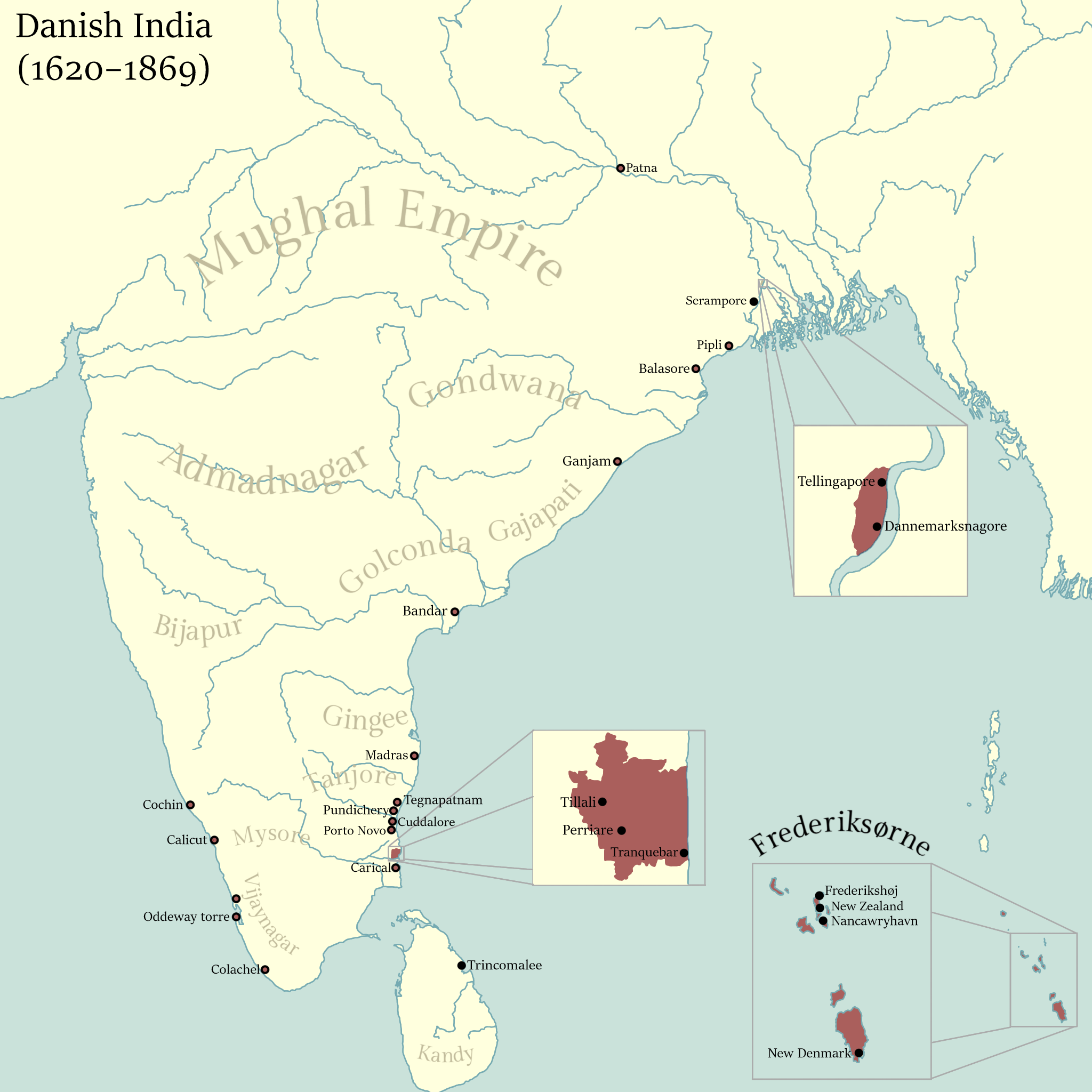
The Danish presence in India was the smallest among all European trading companies. The Danes established a limited presence primarily focused on textile trade from South India and Bengal. Unlike other European powers, Denmark never attempted territorial expansion or political interference, maintaining a purely commercial focus throughout their 225-year presence.
Danish East India Company
The Danish East India Company was established in 1616 under King Christian IV of Denmark. However, their actual operations in India began around 1620.
Characteristics
- Small-scale operations compared to other European companies
- Government-sponsored company with limited capital
- Focused on textile trade, particularly cotton and silk
- Never attempted territorial expansion or political interference
Danish Settlements in India
Tranquebar (Tharangambadi, Tamil Nadu)
- Established in 1620—first Danish settlement in India
- Obtained from Thanjavur Nayak ruler
- Built Fort Dansborg as their headquarters
- Remained Danish until 1845
- Main export: Cotton textiles
Serampore (Bengal)
- Established in 1755
- Located near Hooghly river, close to Calcutta
- Important textile and indigo trading centre
- Cultural significance: Became centre of missionary activity
- Famous for: Serampore Mission Press (1800) – first printing press in India to print books in Indian languages
Other Danish Settlements
- Balasore (Odisha)
- Calicut (brief presence)
- Oddway (near Tranquebar)
Trade Activities
Primary Trade Goods:
- Cotton textiles from Coromandel Coast
- Silk from Bengal
- Saltpeter
- Indigo
- Sugar
Limited Scale: Danish trade operations remained small-scale throughout their presence in India. They never competed seriously with larger European companies like the English, Dutch, or French.
Cultural Contributions
Serampore Mission (1799-1845)
Despite their limited commercial success, the Danish settlement at Serampore gained immense cultural significance due to missionary activities.
William Carey and Serampore Trio
- British Baptist missionary William Carey established the Serampore Mission College in 1818 under Danish protection
- Along with Joshua Marshman and William Ward (Serampore Trio), started educational and printing activities
- Translated Bible into Bengali and other Indian languages
- Started first newspaper in Bengali language
- Pioneered modern Bengali prose
Printing Press Legacy
The Serampore Mission Press (established in 1800) printed books in multiple Indian languages, contributing significantly to vernacular literature and education. This was a revolutionary development that transformed access to knowledge and literacy in Bengal and beyond.
Interesting Fact: The Serampore Mission operated under Danish protection because the British East India Company initially opposed missionary activities in their territories. The Danish settlement provided a safe haven for educational and religious work that the English territories did not allow at that time.
End of Danish Presence
Why Danes Failed
- Limited financial resources compared to English, French, or Dutch
- Small European population in India
- No naval power to protect trade routes
- No political ambitions or military strength
- Primarily focused on peaceful trade only
Sale to British (1845)
- Denmark sold all its Indian possessions to the British East India Company
- Tranquebar sold in 1845 for 12.5 lakh rupees
- Serampore sold in 1845 for approximately 1.25 lakh rupees
- Danish officials and residents were given time to leave or integrate
Peaceful Exit: Unlike the Portuguese (forced out in 1961) or French (defeated militarily), the Danish exit was entirely commercial and peaceful. They simply sold their settlements when they were no longer profitable to maintain. This makes Denmark unique among European powers in India.
Danes in India Timeline
| Year | Event |
| 1616 | Danish East India Company established |
| 1620 | First Danish settlement at Tranquebar (Tharangambadi) established |
| 1620 | Fort Dansborg built at Tranquebar |
| 1755 | Serampore settlement established in Bengal |
| 1799 | Baptist Missionary Society (William Carey) arrived at Serampore |
| 1800 | Serampore Mission Press established |
| 1818 | Serampore College founded |
| 1845 | Denmark sold Tranquebar and Serampore to British East India Company |
Key Takeaways for UPSC
- Danes had minimal political or military impact in India
- Cultural significance primarily through Serampore Mission and printing press
- William Carey’s Serampore Trio revolutionized Bengali literature and education
- First printing press in India to print books in Indian languages (1800)
- Peaceful exit through commercial sale in 1845—unique among European powers
- Smallest European presence in India (only two major settlements)
- Never attempted political interference or territorial conquest