
A Critical Historical Analysis of Gopal Baba Walangkar’s Revolutionary Periodical
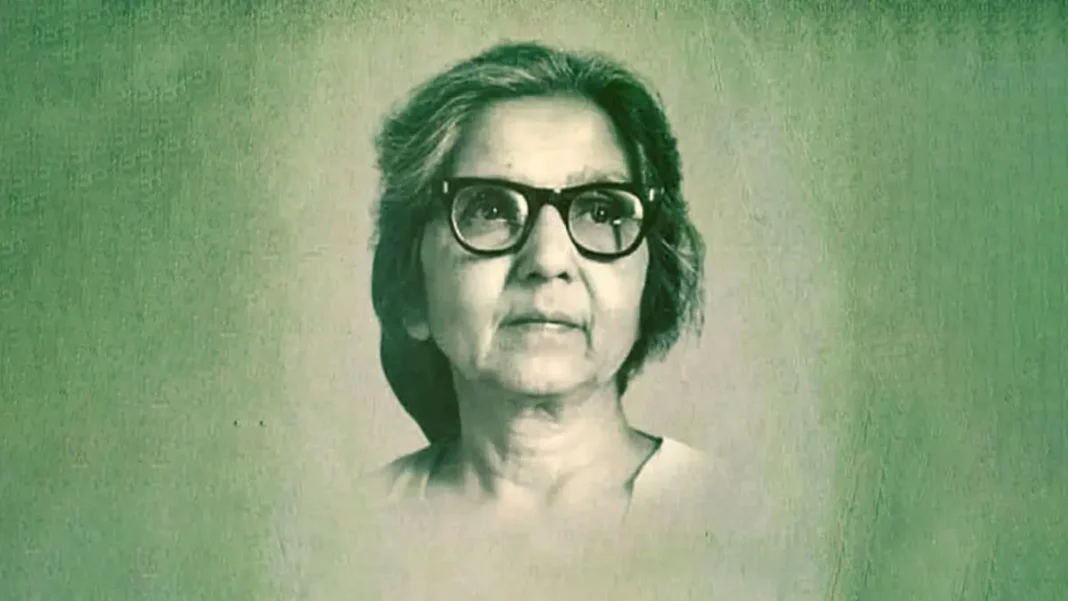
In 1888, at a time when the vast majority of Dalits in India were denied basic literacy and their voices systematically erased from public discourse, a remarkable man named Gopal Baba Walangkar did something unprecedented. He founded Sudharak (सुधारक), meaning “The Reformer”—India’s first newspaper published by and for the Dalit community. This wasn’t merely the launch of another periodical; it was an act of profound defiance against one of history’s most entrenched systems of oppression.
To understand the revolutionary nature of this achievement, we must first grasp what it meant for a Dalit person to claim authorship, to produce knowledge, to speak rather than be spoken about. The caste system was predicated on controlling who could read, write, interpret, and speak. Upper castes monopolized education and literacy, using religious texts to justify their superiority while denying others the tools to question these interpretations. In this suffocating context, Sudharak represented nothing less than an epistemological earthquake—a fundamental challenge to who had the right to know, to speak, and to be heard.
The Man Behind the Revolution
Gopal Baba Walangkar was born in 1840 into the Mahar community of Maharashtra, a group relegated to the lowest rungs of the caste hierarchy and designated as “untouchable.” His early life could have followed the tragic pattern of millions of Dalits—grinding poverty, social humiliation, denial of education, and a life circumscribed by degrading labor. But history had different plans.
Walangkar’s service as a subedar (non-commissioned officer) in the British Indian Army proved transformative. Military service, whatever its colonial implications, offered something rare for a Dalit man of his era: education, literacy, and exposure to a relatively less hierarchical environment. The army didn’t erase caste, but it relaxed some restrictions. More crucially, it gave Walangkar the tools—reading, writing, analytical thinking—that would become weapons in his lifelong struggle against caste oppression.
After retiring from military service, Walangkar could have enjoyed relative comfort. Instead, he chose the harder path of social reform. He established schools for Dalit children, knowing that education was the key to liberation. He wrote countless petitions to British authorities, meticulously documenting discrimination and demanding justice. He organized Dalit communities, creating networks of solidarity where before there had been only isolation and despair. And finally, in 1888, he founded Sudharak—a platform that would amplify Dalit voices and preserve them for history.
What Sudharak Represented
Sudharak was published in Marathi to reach the broadest possible Dalit readership in Maharashtra. Its content was diverse but unified by a clear mission: to critique the caste system, advocate for Dalit rights, and foster collective consciousness among marginalized communities.
The periodical systematically challenged Brahmanical interpretations of Hindu scriptures that supposedly justified untouchability. It questioned the divine sanction of caste, arguing instead that this was a human-made system of exploitation that could and should be dismantled. This theological challenge was dangerous work—it attacked the very foundations of Hindu social order and invited fierce opposition from orthodox communities.
Education featured prominently in Sudharak’s pages. Articles emphasized that literacy and formal schooling were primary tools for Dalit liberation. The periodical reported on educational discrimination, celebrated instances of Dalit academic success, and encouraged families to prioritize education despite economic hardships. In doing so, Sudharak didn’t just advocate for education—it served as an educational tool itself, teaching its readers while informing them.
Beyond education and theological critique, Sudharak worked to build political consciousness. It documented atrocities and everyday discrimination, demanded government intervention against caste-based violence, and encouraged Dalit communities to organize collectively. The periodical helped forge a shared identity among Dalits across geographic and sub-caste boundaries, creating a sense of common cause that was essential for future political mobilization.
The Limitations We Must Acknowledge
Celebrating Sudharak’s achievements doesn’t require us to ignore its limitations. Indeed, a critical historical perspective demands that we examine both the publication’s triumphs and its constraints with equal rigor.
Walangkar’s approach was fundamentally reformist rather than revolutionary. He believed in petitioning authorities, appealing to the conscience of upper castes, and working within existing institutional frameworks to achieve gradual change. This stands in contrast to more radical approaches that called for complete rejection of Hinduism or revolutionary transformation of society. Later leaders like Dr. B.R. Ambedkar would recognize the limits of appeals to upper-caste conscience and adopt more confrontational strategies, including mass conversion movements away from Hinduism.
Should we criticize Walangkar for his reformism? The answer is complex. His pragmatic approach reflected the extreme vulnerability of Dalit communities in the late 19th century. Revolutionary rhetoric might have invited violent backlash that could have destroyed the nascent movement entirely. Walangkar worked under conditions of severe constraint—economic precarity, constant threat of violence, state surveillance, and massive structural barriers. His reformism wasn’t a failure of imagination but perhaps a necessary strategy for survival and incremental progress.
Another contentious aspect of Walangkar’s work was his frequent appeals to British colonial authorities for intervention against caste discrimination. He strategically used the colonial state’s rhetoric of justice and equality to demand protection for Dalits. This collaboration is deeply ambiguous. The colonial state was sometimes more sympathetic than indigenous upper castes to Dalit grievances, partly due to divide-and-rule tactics. Yet this collaboration risked legitimizing colonial rule and diverted attention from the colonial state’s own oppressive practices.
The ethical question remains haunting: in a context where indigenous power structures were completely controlled by upper castes, what alternative did Dalits have? This dilemma—of seeking liberation through problematic alliances—continues to haunt anti-caste politics today.
Sudharak also suffered from severe practical limitations. Despite its historical significance, the periodical had limited circulation. High illiteracy rates among Dalits meant few could read it. Economic constraints made even literate Dalits unable to afford subscriptions. Distribution challenges in reaching dispersed rural communities were immense. The result was that Sudharak primarily reached an emerging educated Dalit elite rather than the broader masses trapped in illiteracy and extreme poverty.
This limitation reveals the structural constraints on media-based mobilization in contexts of extreme marginalization. Creating a newspaper is insufficient if the target audience cannot access or read it. Liberation movements require multi-pronged approaches—not just consciousness-raising through media, but also material interventions like education, economic development, and direct political action.
Like much 19th-century reform discourse, Sudharak’s engagement with gender was limited. While it advocated for social uplift broadly, the specific oppression faced by Dalit women—experiencing the intersection of caste, class, and gender—was not adequately theorized. This reflects broader patriarchal limitations within early anti-caste movements. Contemporary Dalit feminist scholars have rightly critiqued this erasure and centered Dalit women’s experiences and agency in their work.
The Question of Archives and Historical Memory
Very few complete issues of Sudharak survive today. This is not accidental. The limited archival traces reflect how subaltern voices are systematically erased from historical records through what we might call “archival violence.” Upper-caste newspapers from the same era are comprehensively preserved in archives, extensively studied by historians, and readily accessible to researchers. Meanwhile, Dalit publications have been lost, destroyed, or neglected.
Archives are not neutral repositories of the past. They are institutions that reflect and reproduce power hierarchies. The fact that we must piece together Sudharak’s history from fragmentary sources teaches us something profound about how caste operates—not just through direct violence but through controlling memory, archives, and historical narrative itself. The struggle to recover and preserve Dalit histories continues as part of the broader struggle for justice and recognition.
Situating Sudharak in Its Historical Context
The 19th century saw numerous social reform movements in India challenging aspects of Hindu orthodoxy. Raja Ram Mohan Roy campaigned against sati and for women’s rights. Ishwar Chandra Vidyasagar advocated for widow remarriage and women’s education. Jyotirao Phule challenged caste hierarchy and advocated passionately for lower-caste education.
But Sudharak was fundamentally different because it was by and for Dalits. This distinction is critical. Most social reform movements were led by upper-caste reformers who, however well-intentioned, often maintained hierarchical assumptions and spoke for rather than with marginalized communities. Their reforms were often paternalistic, seeking to “uplift” lower castes rather than recognizing their agency and capacity for self-liberation.
Even Jyotirao Phule, who was genuinely radical in his anti-caste politics and allied with Dalit communities, came from the Shudra community—lower caste but not designated as “untouchable.” His social position, while marginalized, was different from communities like the Mahars. Walangkar’s work represented Dalit self-assertion in its earliest, most vulnerable form—Dalits claiming the right to speak for themselves, to analyze their own oppression, and to lead their own liberation struggle.
The Legacy That Endures
Sudharak’s most profound legacy is epistemological. By asserting that Dalits could produce knowledge, interpret scriptures, analyze social structures, and articulate political demands, it fundamentally challenged the knowledge regime that sustained caste oppression. This breakthrough established that Dalit voice and Dalit knowledge were legitimate and authoritative—a principle that continues to animate Dalit scholarship, literature, and activism today.
Dr. B.R. Ambedkar, born just three years after Sudharak’s founding, would become the greatest leader of the anti-caste movement and principal architect of India’s Constitution. While there’s no evidence Ambedkar directly read Sudharak in his youth, the intellectual groundwork laid by Walangkar created conditions for Ambedkar’s later work. Many of Ambedkar’s core ideas echo themes from Sudharak: education as the primary tool of liberation, political representation as essential, critique of Hindu religious justifications for caste, importance of self-respect and dignity, and the need for Dalit self-organization. Ambedkar would develop these themes with far greater sophistication and political power, but Walangkar pioneered their articulation.
Sudharak also inspired subsequent generations of Dalit journalists and activists to create their own media platforms. Publications like Bahishkrit Bharat and Janata (both edited by Ambedkar), the Dalit Panther publications of the 1970s, and contemporary Dalit magazines and digital platforms all stand on the foundation Walangkar laid. Each generation continues the struggle for representation and voice that Sudharak began.
Contemporary Resonance
In contemporary India, where caste violence and discrimination persist, where Dalits remain severely underrepresented in media and positions of power, where upper-caste control over mainstream media remains disproportionate, Sudharak’s legacy is profoundly relevant.
The struggle for Dalit representation in mainstream media directly echoes Walangkar’s efforts. Despite constitutional guarantees of equality, mainstream Indian media remains dominated by upper castes. Dalit journalists are vastly underrepresented, Dalit perspectives are marginalized, and caste discrimination within media organizations is well-documented. Contemporary Dalit journalists, bloggers, and digital media activists continue Walangkar’s work of creating independent platforms. Digital media has created new possibilities, yet digital divides replicate old inequalities.
Just as Sudharak challenged dominant narratives about caste, contemporary Dalit literature, scholarship, and activism challenge neo-liberal erasures of caste that claim India is “post-caste,” Hindu nationalist narratives that deny caste oppression, academic theories that abstract caste away from lived experience, and media coverage that sensationalizes caste violence while ignoring systemic discrimination. Dalit scholars insist on centering lived experience, recovering suppressed histories, and analyzing contemporary caste through Dalit perspectives—continuing Sudharak’s epistemological project.
A Complex Inheritance
Gopal Baba Walangkar and Sudharak occupy a complex position in Indian history. They represent both the heroic emergence of Dalit voice and the limitations of early reformist strategies. Walangkar’s work was groundbreaking yet constrained, revolutionary yet accommodationist, visionary yet limited by its historical moment, courageous yet operating within structures of power he could not fully challenge.
A critical historical perspective must acknowledge both dimensions. We celebrate the extraordinary courage and significance of creating India’s first Dalit periodical while recognizing its limitations and contradictions. This balanced approach honors Walangkar’s contributions without mythologizing them, and situates Sudharak within the longer, ongoing struggle for caste annihilation.
The struggle that Sudharak represented remains unfinished. Caste persists in India—in violence, discrimination, segregation, economic inequality, social exclusion, and cultural devaluation. The project of caste annihilation that Ambedkar articulated remains unrealized. Yet every Dalit student who attains education, every Dalit writer who publishes, every Dalit activist who organizes, every Dalit scholar who produces knowledge, stands on the foundation that Walangkar built.
Sudharak reminds us that resistance begins with voice—with the audacity to speak when silence is enforced, to write when literacy is denied, and to claim dignity when dehumanization is the norm. In this sense, Walangkar’s legacy transcends the specific achievements of his periodical. He demonstrated that liberation begins with self-assertion, with the radical act of oppressed people telling their own stories, interpreting their own experiences, and claiming authorship of their own liberation.
That lesson, forged in the pages of a small Marathi periodical in 1888, remains as urgent and revolutionary today as it was then. The reformer’s work continues.