

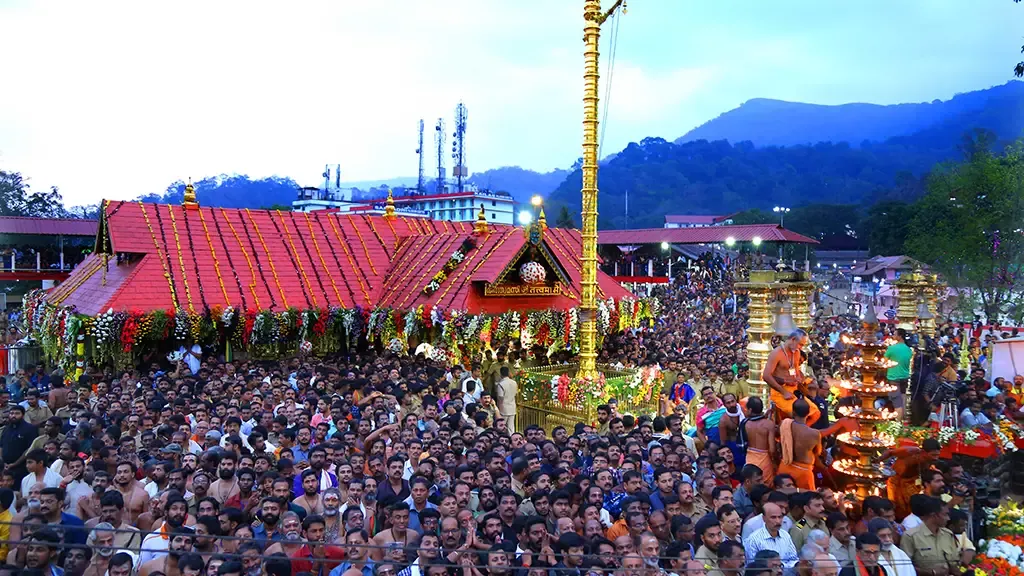
Disclaimer: This article presents a historical study of Sabarimala based on authenticated scholarly research, archaeological data, legal records, and primary historical sources. It seeks to differentiate evidence-based history from mythological and devotional narratives while maintaining full respect for religious belief and oral tradition. The discussion is strictly academic in intent, does not question faith or practice, and all interpretations are provisional, subject to revision through ongoing scholarly debate and the emergence of new evidence.
The question seems deceptively simple: when did Sabarimala begin? Yet beneath the contemporary devotional landscape lies a far more complex historical narrative. Where millions now see an ancient Hindu temple dedicated to Lord Ayyappan, historians find a palimpsest of tribal memories, colonial documentation, and remarkably recent transformations. The site that today draws 40-50 million pilgrims annually was, until the mid-20th century, a modest regional shrine largely unknown outside Kerala. Its explosive growth, its current institutional form, even the name of its primary deity, all are far more recent than most devotees realize. What follows traces that journey through verifiable evidence: inscriptions that can be dated, legal documents that can be examined, colonial records that provide external perspectives, and scholarly research that distinguishes documented fact from religious narrative. It is the story of how a likely tribal memorial became Sabarimala and how the Sabarimala we know today is overwhelmingly a creation of the past century.
The Deity: Who Is Ayyappan?
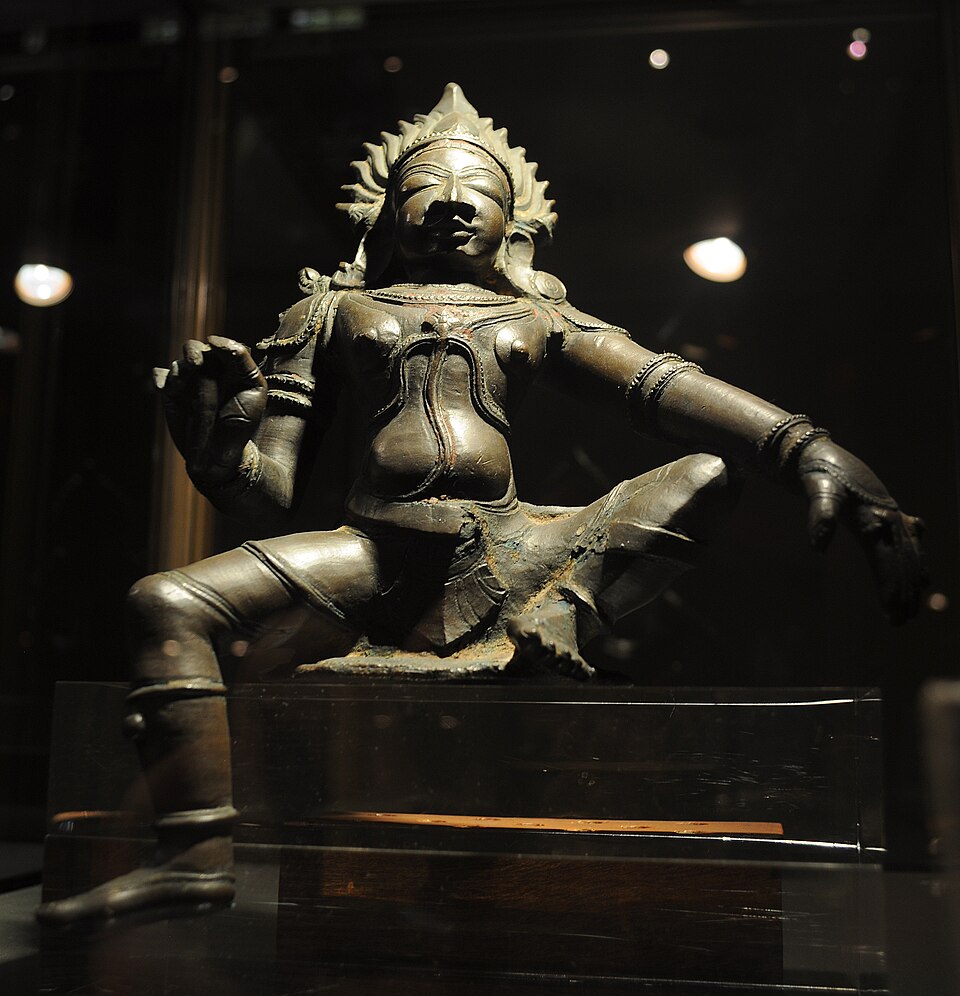
Before we can understand Sabarimala, we must understand its deity or more precisely, the multiple deity concepts that merged into what we now call Ayyappan. The earliest documented deity concept is Sastha (also spelled Shasta), a Sanskrit term meaning ‘Teacher, Guide, Lord, Ruler.’ The oldest epigraphic evidence comes from 855 CE an inscription by an Ay King at the Padmanabhapuram Sivan temple in Kerala, confirming that Sastha worship existed in Kerala by the 9th century CE. However, this was not yet an independent temple tradition. Independent temples dedicated to Sastha emerged only from the 11th century CE onward. Prior to this, Sastha veneration occurred within Shiva and Vishnu temples, suggesting a subordinate or guardian role rather than primary deity status. In Tamil Nadu, the parallel deity was Aiyanar (also Ayyanar), functioning as a village guardian who protected boundaries and rural communities. The earliest inscriptional reference to Aiynar-Shasta dates to the 3rd century CE in the Arcot district of Tamil Nadu, reading ‘Ayanappa; a shrine to Cattan.’ A 4th century CE inscription at Uraiyur near Tiruchirapalli provides another early reference. Literary evidence from Silappatikaram (4th-5th century CE) contains references to Aiyanar-Cattan. Tamil Sangam classics like Purananuru and Akananuru are claimed to reference Ayyanar and Cattan, though specific verse citations remain elusive in available scholarship.
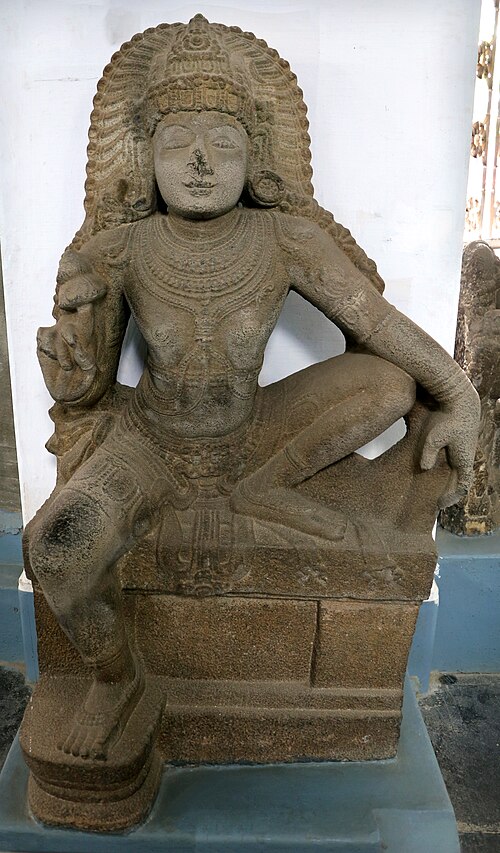
What becomes revealing is that the term ‘Ayyappan’ (or Ayyappa) does not appear in medieval Puranas. As noted by researcher Vasudevan Narayanan in his analysis of traditional Ayyappa songs, all such songs are composed in modern Malayalam, placing their creation no earlier than the 16th century. The deity we know as Ayyappan represents a synthesis of three distinct concepts: first, Aiyanar, the popular Tamil village deity with inscriptional evidence from the 3rd century CE; second, Sastha, an older and more important deity whose references trace to 3rd century CE Tamil Nadu and 855 CE Kerala; and third, a quasi-historical or legendary figure associated with the Pandalam royal family. The popular mythology of Ayyappan as the son of Shiva and Vishnu (in Mohini form), born to defeat the demoness Mahishi, represents a later Brahmanical narrative layered onto these earlier deity concepts. The very name ‘Ayyappan’ derived from Malayalam ‘acchan’ and Tamil ‘appa,’ both meaning father, suggests a folk origin that was subsequently elaborated with Puranic mythology. This synthesis itself tells a story of cultural transformation, of local guardian deities gradually absorbed into Brahmanical frameworks and given elaborate mythological genealogies that obscure their humbler, more localized origins.
The Site: From Tribal Shrine to Temple Complex
The Documentary Silence
The transformation of the physical site at Sabarimala is, if anything, even more dramatic than the evolution of the deity concept. The most striking fact in the historical record is the complete absence of ancient or medieval textual references directly to the Sabarimala temple. No inscriptions. No land grants. No administrative records. No temple chronicles from the Chera, Chola, Pandyan, or Vijayanagara periods. This silence is profound and significant. Major South Indian temples generated extensive paper trails documenting royal patronage, property disputes, ritual schedules, and administrative structures. Sabarimala generated none. This documentary void strongly suggests that whatever existed at the site in earlier centuries, it was not a major regional temple of the type that typically attracted royal patronage and administrative documentation. Religious tradition attributes the temple’s establishment or rediscovery to King Rajasekhara Pandian in the 12th century CE, though this remains undocumented legend rather than verified history. The earliest verifiable written record of Sabarimala as a temple comes from 1818 and even this represents tradition and legend rather than contemporary documentation. As historian Rajan Gurukkal notes, the shrine was originally a ‘cult spot’ for a tribal deity before it became a place of worship for Ayyappa in the 15th century. The site likely existed as a Sastha shrine before the popularization of the Ayyappan narrative, serving local forest communities rather than functioning as a major pilgrimage destination.
The Tribal Foundation and Displacement
The Mala Araya tribal community whose name literally translates to ‘Monarch of the Hills’ maintains they were the original custodians of Sabarimala. According to their oral history, documented by ethnographer K.K. Prabhakaran in 2005, the community lived in eighteen hills for approximately a thousand years, performing rituals including thenabhishekam (honey bathing) and the lighting of Makara Jyothi until the 19th century. Their folk songs, the Malayarayan nattupattu, contain narratives of their association with Sabarimala, providing cultural testimony to their historical presence. These traditions represent a counter narrative to later Brahmanical accounts, centring forest dwelling communities as the original sacred authorities. The displacement of the Mala Araya community by the Pandalam royal family occurred in the 1800s, marking a crucial turning point. Around 1942, when Travancore kings visited the site, they brought priests from the Thazhamon Madom (Brahmin) family, initiating the Ayyappa legend was co-opted by Brahminical Hinduism. This transformation from tribal memorial to Brahmanical temple represents one of the most significant yet least acknowledged shifts in the site’s history, erasing the indigenous custodianship while constructing new narratives of ancient Hindu tradition.
The Colonial Record and Modern Establishment
Verifiable written history of Sabarimala begins remarkably late in 1818, when Lieutenant Benjamin Swain Ward of the British colonial service documented a temple with 10,000-15,000 devotees attending a five-day annual January festival. This represents the first external, non-devotional description of the site. In 1821, when the Pandalam kingdom was annexed to Travancore, Sabarimala temple came under Travancore state administration. Ward and his colleague Lieutenant Peter Eyre Conner published their comprehensive ‘Memoir of the Survey of Travancore and Cochin States’ in 1863, providing detailed documentation of the pilgrimage as a modest regional affair. Samuel Mateer’s 1883 ethnography ‘Native Life in Travancore’ documented the Mala Araya connection, providing crucial testimony of tribal custodianship before that memory could fade entirely. The 20th century brought repeated destruction and reconstruction. In January 1902, fire destroyed the temple when grass on the collapsed roof ignited, though the 50 kg panchaloha idol and sacred ornaments were saved. The idol installed in 1910 represents the first documented idol installation at the site, a bronze image created by Prabhakar Acharya, with iconography borrowing from late Shasta and Buddhist traditions including yogic postures and mudras. This synthesis of multiple religious streams is itself revealing. Then came 1950: a devastating fire, suspected to be arson, destroyed the stone idol. The community response revealed Sabarimala’s evolving cross-community character. Kochummen Muthalali, a Christian from Mavelikkara, funded the reconstruction. Neelakanta Panicker and Ayyappa Panicker of the Thattavila Vishwakarma family in Chengannur created a new panchaloha idol. The Travancore Devaswom Board was established under the Travancore-Cochin Hindu Religious Institutions Act XV of 1950, formalizing state administrative control that continues today. A Hindu temple, rebuilt with Christian generosity, administered by state bureaucracy. Sabarimala was becoming something that transcended any single tradition or community.
The Women’s Entry Prohibition: Deconstructing ‘Ancient Tradition’
Perhaps no aspect of Sabarimala’s history has been more contentious or more misunderstood than the prohibition on women of menstruating age. The widespread claim that this ban represents ‘ancient tradition’ or practices of ‘time immemorial’ collapses entirely under historical scrutiny. The evidence demonstrates unambiguously that women of all ages visited Sabarimala throughout much of its documented history. In 1939, the Queen of Travancore (Maharani) visited Sabarimala, documented by multiple sources. The same year, T.K.A. Nair, former advisor to Prime Minister Manmohan Singh, had his Choroonu ceremony (first rice-feeding ceremony for infants) performed at Sabarimala while on his mother’s lap facing the deity. Prior to 1965, numerous women brought their children to Sabarimala for Choroonu ceremonies, well-documented in the historical record. Before 1950, women regularly visited the temple, especially after roads were built for a Presidential visit, making access easier. As writer N.S. Madhavan documented in his 2018 research, there was an informal custom discouraging menstruating woman, but it was ‘unenforced and often not followed.’ Women’s presence at Sabarimala was unremarkable and uncontroversial for much of the 20th century.
The formal, legally enforceable ban came shockingly recently. In 1965, the Kerala Hindu Places of Public Worship (Authorization of Entry) Rules made customs enforceable through law, specifying that women ‘not by custom and usage allowed to enter’ could not enter during the pilgrimage season (November-January) and Vishu (April). According to N.S. Madhavan’s research, the complete ban was formalized even later in 1972 after some male worshippers objected to women’s presence. In 1969, a flag staff (Dhwajastambham) was installed, representing institutional changes that scholars link to the shift in customs and practices. The year-round ban came later still. In 1991, S. Mahendran filed a public interest litigation arguing that young women visiting Sabarimala in the off-season violated customs. In the case S. Mahendran v. The Secretary, Travancore Devaswom Board, the Kerala High Court banned women and girls between ages 10 and 50 from entering Sabarimala year-round. Justices K. Paripoornan and K. Balanarayana Marar stated this restriction was ‘in accordance with tradition’ and directed police to enforce the ban if necessary. Consider that timeline carefully: the prohibition defenders called ‘ancient’ and ‘time immemorial’ was formalized by law between 1965 and 1972 within living memory of people still alive today. The year-round ban dates only to 1991, barely three decades ago. Claims of ancient tradition are demonstrably false.
In 2006, the Indian Young Lawyers Association filed a public interest litigation before the Supreme Court challenging the prohibition. On September 28, 2018, a five-judge Constitutional Bench ruled 4-1 that the exclusion of women violated their fundamental rights under Articles 14 (Right to Equality), 15 (Right against discrimination), and 25 (Freedom of Religion). Chief Justice Dipak Misra, along with Justices A.M. Khanwilkar, Rohinton Nariman, and D.Y. Chandrachud (now Chief Justice of India), held that the practice was discriminatory. Justice Indu Malhotra dissented, arguing that courts should not determine which religious practices should be struck down. On January 2, 2019, Bindu Ammini (a 42-year-old Dalit activist and lawyer) and Kanaka Durga (a 44-year-old civil supplies employee) became the first women of menstruating age to enter the temple following the Supreme Court verdict. Escorted by police at 3:45 AM, they entered not via the traditional 18 sacred steps but through the staff gate. Their entry sparked violent protests, hartals, and a political firestorm that continues to reverberate. Bindu faced particularly severe targeting due to her Dalit identity, revealing how caste and gender discrimination intersect even in supposedly egalitarian pilgrimage traditions. The aftermath demonstrated how recently invented ‘traditions’ can be defended with the ferocity typically reserved for genuinely ancient practices, and how historical evidence can be overwhelmed by contemporary political mobilization.
The Modern Miracle: Transformation into Mass Pilgrimage
Until the mid-20th century, Sabarimala was not a particularly popular pilgrimage destination. The numbers tell a dramatic story of transformation. In 1818, Lieutenant Ward documented 10,000-15,000 devotees. By 1929, Diwan Bahadur L.A. Krishna Iyer recorded 40,000 pilgrims during Makaravilakku. By 2000, the temple attracted an estimated 10-15 million devotees annually. Today, the figure has reached 40-50 million pilgrims annually a 2,500-fold increase from 1818 to present, with most of that explosive growth occurring in the late 20th century. As Kerala Tourism’s official history acknowledges: ‘Until the mid-20th century, Sabarimala wasn’t a popular pilgrimage destination.’ Its rise to global prominence is overwhelmingly a modern phenomenon. The catalysts of this transformation are identifiable and recent: improved infrastructure including better roads and improved access from Pamba River; the development of trekking routes making pilgrimage physically accessible to middle-class devotees; growing economic prosperity in Kerala and among the diaspora providing resources for pilgrimage; media amplification, particularly the 1975 Malayalam film ‘Swami Ayyappan’ featuring K.J. Yesudas singing ‘Harivarasanam,’ which sparked widespread popularity and led the Travancore Devaswom Board to formally adopt the song for daily ritual use; post-Independence Hindu spiritual renaissance with pilgrimage tourism becoming increasingly important; and physical enhancements like the 1985 covering of the 18 sacred steps (Pathinettampadi) in Panchaloha, elevating the site’s prestige and creating iconic imagery for devotional media.
The Weight of Historical Evidence
After examining the documentary record, archaeological evidence, legal documents, and scholarly research, several conclusions emerge with clarity. First, the Ayyappan deity concept is a synthesis that merged Tamil Aiyanar worship (documented from 3rd century CE), Kerala Sastha traditions (documented from 855 CE), and later Brahmanical mythology. The name ‘Ayyappan’ itself appears to be modern, with traditional songs in modern Malayalam suggesting composition no earlier than the 16th century. The popular mythology of Ayyappan as the son of Shiva and Vishnu represents a later narrative layered onto earlier guardian deity concepts. Second, the Sabarimala site likely originated as a tribal shrine maintained by the Mala Araya community. The complete absence of any ancient or medieval textual references to the temple is both striking and significant, strongly suggesting the site was not a major regional temple that would typically generate administrative documentation. The earliest external written reference comes only in 1818, with scholarly estimates placing temple establishment around the 12th century CE based on tradition rather than contemporary documentation.
Third, Brahminization occurred primarily in the 19th-20th centuries, with the displacement of Mala Araya custodians and the appointment of Thazhamon Madom Brahmin priests around 1942. The current idol dates only to 1910, replaced after fire in 1950, making it barely a century old far from the antiquity often claimed. Fourth, and perhaps most significantly, the women’s entry prohibition is demonstrably modern, formalized by law only in 1965-1972 and extended to year-round enforcement in 1991. Claims of ‘ancient tradition’ or ‘time immemorial’ customs are directly contradicted by extensive evidence of women, including royalty, visiting the temple throughout the 20th century until legal prohibition. The 2018 Supreme Court verdict recognizing this historical reality and the violent resistance it provoked reveal how recently invented practices can be defended with extraordinary passion when they serve contemporary political purposes. Fifth, the transformation into a mass pilgrimage site is overwhelmingly a late 20th century phenomenon, driven by infrastructure development, media popularization, economic growth, and conscious religious promotion rather than ancient tradition. The site that drew 10,000 devotees in 1818 now attracts 40-50 million a transformation of scale that fundamentally altered its character and environmental impact.
None of this negates the profound spiritual meaning Sabarimala holds for millions of devotees. Faith operates in realms beyond historical documentation, and religious significance cannot be measured solely by archaeological evidence or legal records. But understanding the documented history distinguishing what we can verify from what we believe matters for multiple constituencies and purposes. It matters for the Mala Araya community, whose displacement from their ancestral custodial role remains an open wound and whose history deserves recognition rather than erasure. It matters for women seeking equal access to sacred spaces and challenging discriminatory practices justified through false claims of antiquity. It matters for environmental conservation of the Western Ghats biodiversity hotspot, as understanding the site’s recent transformation helps contextualize its ecological impact. It matters for scholars committed to rigorous historical methodology and the patient work of distinguishing documented fact from religious narrative. And it matters for intellectual honesty and our collective ability to acknowledge that what feels ancient may be remarkably modern, that what seems unchanging has undergone profound transformation within living memory, and that the sacred itself has a history worth understanding on its own terms. The hills of Sabarimala hold layers of human meaning accumulated over centuries tribal reverence, syncretic deity concepts, colonial documentation, Brahmanical appropriation, mass pilgrimage, legal battles, and environmental degradation. Understanding these layers does not diminish the sacred; it enriches our comprehension of how human communities create, transform, and contest meaning in landscape and ritual. That understanding, grounded in verifiable evidence while respecting the limits of historical knowledge, is the contribution historical scholarship can offer to contemporary debates about tradition, access, and the nature of the sacred in modern India.
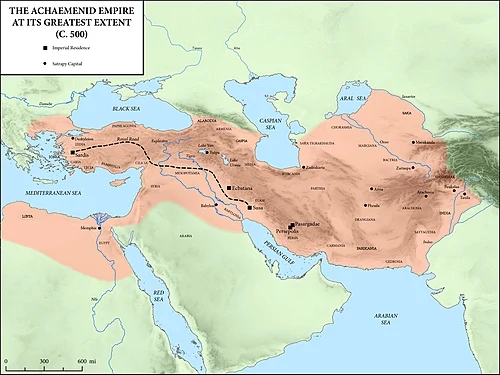
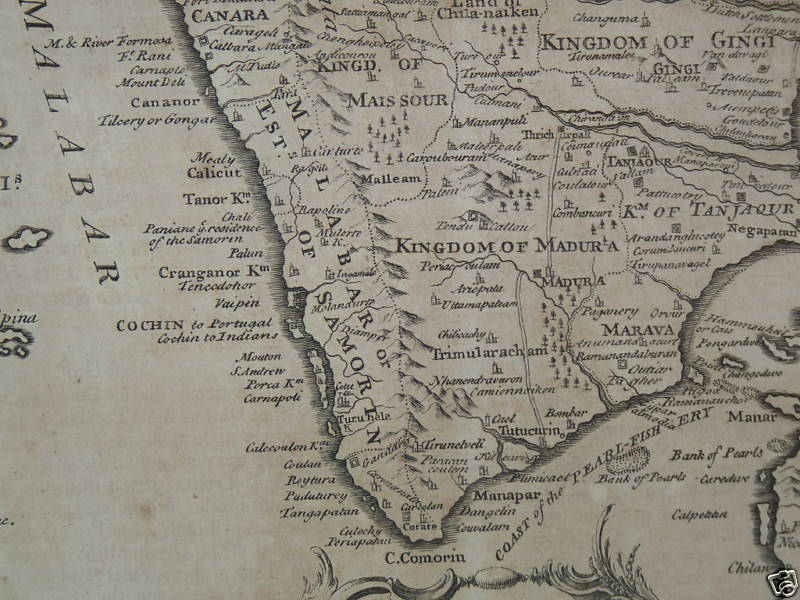
Sabarimala Sree Dharma Sastha Ayyappa temple is said to be built in 13th Century. One point of view is “ Hari Hara Sutha” Ayyappa is in response to the bitter rivalry between Saivism and Vaishnavism.