
Keywords: Brahmo samaj, Raja Ram Mohanroy, Social Reform Movement
The Brahmo Samaj stands as one of the most significant socio-religious reform movements in modern Indian history. Founded in 1828 by Raja Ram Mohan Roy in Calcutta, it represented the first systematic attempt to reconcile Hindu tradition with Western rationalism and create a reformed religious framework for colonial India. Yet, nearly two centuries later, a critical assessment reveals a movement marked by profound contradictions—one that challenged orthodoxy while reinforcing certain hierarchies, championed universalism while remaining circumscribed by class boundaries, and sought indigenous reform while operating within a framework heavily influenced by colonial modernity.
The Revolutionary Genesis
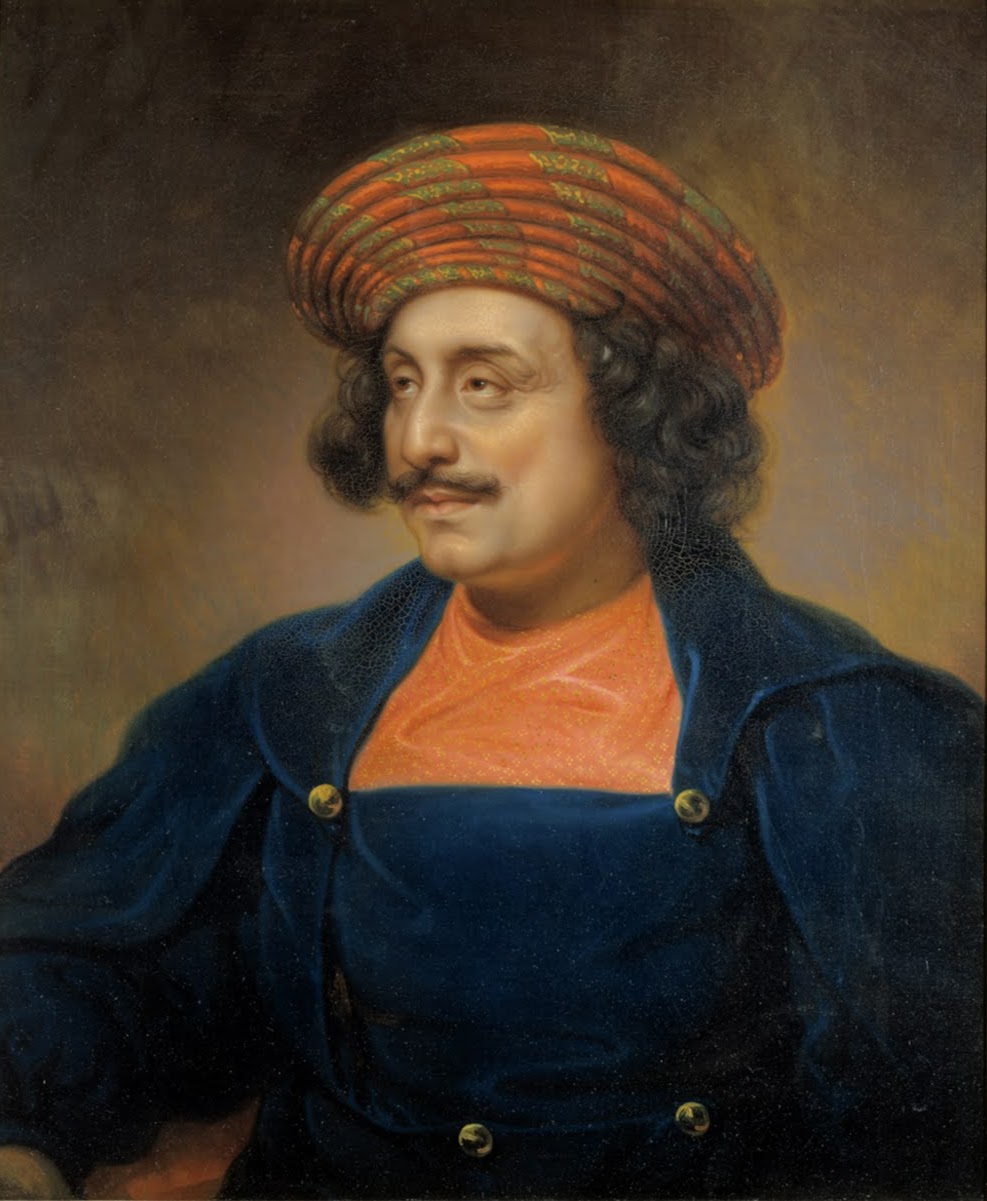
Ram Mohan Roy’s establishment of the Brahmo Sabha (later Brahmo Samaj—literally “Society of Brahman”) emerged from a unique historical conjuncture. British colonial rule had introduced new forms of knowledge, legal systems, and social critique that destabilized traditional Hindu authority structures. Roy, a polyglot intellectual fluent in Sanskrit, Persian, Arabic, Bengali, and English, occupied a liminal space between worlds. His project was audacious: to purify Hinduism by returning to what he perceived as its monotheistic Vedantic core, stripped of what he termed “superstitious” accretions like idol worship, caste discrimination, and oppressive rituals.
The movement’s initial achievements were undeniable. The successful campaign against sati (widow immolation), culminating in its legal abolition in 1829, demonstrated that indigenous reform could harness both scriptural reinterpretation and colonial legislative power. The Brahmo emphasis on monotheism, rejection of priestly mediation, and advocacy for women’s education and widow remarriage positioned it as a modernizing force within Hindu society.
The Paradox of Elite Reform
However, the Brahmo Samaj’s most significant limitation lay in its inherently elite character. This was a movement of the bhadralok—the Bengali genteel class of landed gentry, professionals, and intelligentsia. The reformed worship services, conducted in Sanskrit and later Bengali, with their emphasis on rationalist theology and Upanishadic philosophy, required a level of education and leisure largely unavailable to the vast majority of Indians. The Brahmos’ horror at “popular” Hindu practices—the very festivals, devotional traditions, and embodied rituals that sustained religious life for millions—revealed a class-based disdain as much as theological critique.
The movement’s geographic concentration in Bengal and limited spread to other urban centers like Bombay and Madras reflected this constraint. Despite its universalist rhetoric, the Brahmo Samaj never developed a mass base. Its elaborate theological debates—which eventually split the movement into factions led by Debendranath Tagore and Keshab Chandra Sen—seemed increasingly esoteric to most Indians engaged in the actual struggle against colonial domination and economic exploitation.
The Colonial Embrace: Collaboration or Compromise?
A critical examination cannot avoid the Brahmo Samaj’s complex relationship with British colonialism. While not collaborationist in intent, the movement operated within an epistemological framework that often validated colonial critiques of Hindu society. The acceptance of Western rationalism as the standard against which Hindu tradition must be measured, the embrace of Christian organizational forms (congregational worship, sermons, hymn-singing), and the reliance on colonial legal mechanisms for social reform all suggest a movement struggling with what postcolonial theorists would later term “mimicry.”
Roy’s own justifications for reform frequently employed the rhetoric of civilization and progress that paralleled colonial discourse. When the Brahmos criticized image worship, the caste system, or gender practices, they sometimes inadvertently reinforced the colonial narrative of Indian backwardness requiring external intervention—or at least external standards—for amelioration. This created a peculiar dynamic where indigenous reform movements found themselves legitimizing aspects of the very power structure they might otherwise have resisted.
The movement’s Christian influences extended beyond mere organizational borrowing. Keshab Chandra Sen’s theological trajectory, which led him toward an increasingly syncretic position that elevated Christ as a divine figure, illustrated the tension between maintaining Hindu identity and absorbing Western religious forms. His faction’s “New Dispensation” (Nava Vidhan), which attempted to synthesize elements from multiple religious traditions, revealed both the cosmopolitan ambitions and the cultural confusion at the heart of the later Brahmo project.
Gender Reform: Progressive Vision, Patriarchal Limits
The Brahmo Samaj’s advocacy for women’s rights deserves both recognition and scrutiny. The movement championed female education, opposed child marriage, and supported widow remarriage—positions that were genuinely radical in the 19th-century context. Brahmo families produced some of India’s first female doctors, teachers, and writers. The revised marriage ceremony, which required the bride’s consent and eliminated many demeaning rituals, represented a significant conceptual shift toward recognizing women’s agency.
Yet the vision of womanhood promoted by the Brahmos remained circumscribed within Victorian middle-class ideals of domesticity and respectability. The educated woman was to be a companion to her husband and a moral guardian of the home—a “bhadramahila” (genteel woman)—rather than an autonomous individual with rights independent of family structures. The movement’s discourse on women’s reform, often articulated by male reformers, sometimes objectified women as symbols of social progress rather than recognizing them as subjects with their own voices and aspirations.
Furthermore, the scandal surrounding Keshab Chandra Sen’s arrangement of his daughter’s marriage below the legal age he himself had campaigned for exposed the gap between reformist rhetoric and patriarchal practice. This hypocrisy contributed to yet another schism within the movement, suggesting that even progressive reformers struggled to fully transcend the gendered power structures they critiqued.
Theological Thinness and Ritual Poverty
From a religious studies perspective, the Brahmo Samaj suffered from what might be termed theological thinness. In its zeal to purify Hinduism, it eliminated much of what makes religion existentially meaningful for most practitioners: the rich mythology, the embodied rituals, the festival cycles connecting humans to natural and cosmic rhythms, the visual and sensory dimensions of devotion. The Brahmo service—essentially a sermon, prayers, and songs centered on an abstract, formless God—provided intellectual satisfaction for the educated elite but lacked the affective power of traditional Hindu worship.
This rationalist reductionism misunderstood the functions of religious practice. Idol worship, pilgrimage, sacrifice, and festival are not merely “superstitions” to be abolished but complex symbolic systems through which communities construct meaning, maintain social bonds, and navigate life’s uncertainties. By dismissing these as backward, the Brahmos revealed a modernist hubris that assumed rational theology superior to embodied, communal religious experience.
The movement’s theological eclecticism, particularly in its later phases, further weakened its coherence. As it incorporated elements from Christianity, Islam, and other traditions, the Brahmo Samaj risked becoming everything and nothing—a universalist abstraction rather than a lived religious tradition capable of sustaining communities across generations.
Legacy: More Symbolic than Substantial?
The Brahmo Samaj’s lasting impact on Indian society remains contested. Its direct organizational legacy is minimal; the movement fragmented into multiple factions, and its membership has always been small, numbering perhaps in the tens of thousands at its peak and far fewer today. The great Brahmo families—the Tagores, the Roys, the Sens—are remembered more for their individual cultural and literary contributions than for their religious affiliation.
Yet the movement’s indirect influence pervades modern Indian discourse. The Brahmo insistence that reform must come from within rather than through colonial imposition, that Hindu tradition contains resources for its own renewal, and that social progress and religious identity need not be antagonistic—these ideas shaped subsequent reform movements, including the Arya Samaj and aspects of the nationalist movement. The legitimation of scriptural reinterpretation as a tool for social change opened space for diverse reform projects, from conservative to progressive.
The Brahmo emphasis on education, particularly female education, contributed to the emergence of a modern Indian middle class that would eventually staff the independence movement and the post-colonial state. Many nationalist leaders, while not Brahmos themselves, operated within a conceptual framework partly shaped by Brahmo ideas about social reform, rational religion, and cultural pride.
Contemporary Relevance: Lessons for Modern India
What lessons does the Brahmo Samaj offer contemporary India, a nation struggling with communal tensions, caste violence, gender inequality, and the question of how to be modern without abandoning tradition? The movement provides both inspiration and cautionary lessons.
Its inspiring aspects include the demonstration that religious traditions can be self-critical and self-reforming, that appeal to ancient texts can serve progressive as well as conservative ends, and that indigenous agency matters in processes of social transformation. The Brahmo example shows that reform need not await external imposition but can emerge from engaged interpretation of one’s own tradition.
The cautionary lessons are equally important. Elite-driven reform movements that disdain popular practice and remain disconnected from mass aspirations risk irrelevance. Reform that too closely aligns with dominant power structures—whether colonial or contemporary global capitalism—may unconsciously serve those structures rather than genuinely liberating the oppressed. Theological abstraction divorced from embodied community practice cannot sustain religious movements across generations.
Moreover, the Brahmo experience reveals the dangers of cultural cringe—the assumption that one’s own tradition is inherently inferior and must be remodeled according to external standards. True reform requires distinguishing between unjust practices that must be eliminated and valuable traditions that deserve preservation and adaptation. Not every aspect of modernity represents progress, and not every traditional practice embodies oppression.
An Incomplete Revolution
The Brahmo Samaj represents an incomplete revolution—a movement that glimpsed the possibility of reconciling tradition with modernity, faith with reason, social justice with cultural continuity, but ultimately could not fully realize that vision. Its contradictions mirror the larger contradictions of colonial modernity itself: the simultaneous impulses toward liberation and domination, universalism and exclusion, reform and preservation.
Perhaps the movement’s greatest contribution was simply to demonstrate that reform was possible, that Hinduism was not a static, unchanging monolith but a living tradition capable of self-examination and transformation. In this sense, the Brahmo Samaj opened conceptual space for subsequent debates about what it means to be Hindu, Indian, and modern—debates that continue to shape the subcontinent today.
A critical interpretation must acknowledge both the movement’s genuine progressive achievements and its significant limitations. The Brahmo Samaj challenged oppressive practices and championed education and rationality, yet it remained bound by class prejudices, colonial epistemological frameworks, and a theological vision too abstract to sustain communal religious life. It was neither the unalloyed heroic reform movement of hagiographic accounts nor the mere colonial collaborationist project of harsh postcolonial critique, but something more complex—a sincere, flawed attempt by educated Indians to navigate the treacherous currents of modernity while maintaining religious and cultural identity.
The story of the Brahmo Samaj ultimately reminds us that social reform is always contested, always incomplete, and always shaped by the particular historical circumstances of its emergence. Its successes and failures offer valuable insights for contemporary movements seeking to promote justice while respecting cultural particularity, to embrace necessary change while maintaining valuable continuities, and to reform religious traditions without destroying the communities those traditions sustain.